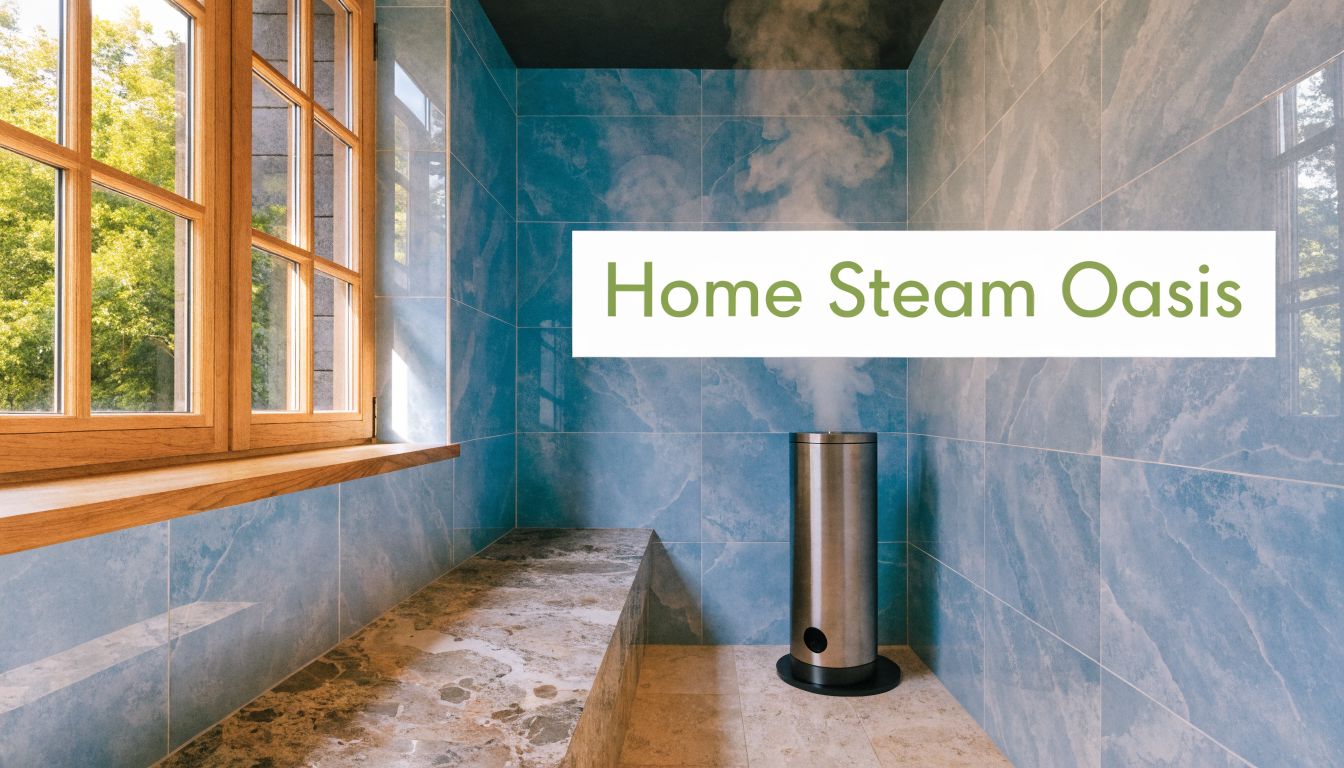
Create a Steam Room for House: Your Wellness Guide
At 9:30 p.m., the house is finally quiet. Your shoulders are still tight, your mind is still racing, and the idea of driving to a spa feels absurd. A steam room for house use changes that equation. It puts relief a few steps away, ready whenever your body needs heat, stillness, and a reason to slow down.
The appeal is bigger than comfort. A home steam room creates a ritual you can keep. After a workout, after a long flight, after a demanding day, you have a private place to reset without leaving home or scheduling around someone else’s hours.
That distinction matters because many homeowners begin with a beautiful idea and end up staring at the demands of a traditional tiled steam room. Full custom builds can be stunning, but they also ask for more waterproofing discipline, more maintenance, and more construction coordination than many people expect. The smarter approach is to treat this as a sanctuary project first and a building project second. Start with how you want to live, then choose the system that supports that routine with less friction and better long-term performance.
A good steam room should feel calm to use and sensible to own.
If you are considering one, be selective. Prioritize build quality, moisture control, dependable components, and an installation path that matches your home and your tolerance for upkeep. Done well, a steam room becomes one of the few upgrades that serves both property value and personal well-being every single week.
The Art of the At-Home Sanctuary
At the end of a demanding day, the right room can change your state in ten minutes. A home steam room earns its place because it turns recovery into part of daily life, not an occasional appointment.
That distinction matters.
Many homeowners start with the romance of a custom tiled steam room, then run straight into waterproofing details, ventilation planning, grout maintenance, and long construction timelines. If your goal is a sanctuary you will use often, choose the option that supports the ritual without burdening you with avoidable upkeep. Modern systems from brands carried by MandeSpa and Vitality Sauna Store make that possible. They deliver the atmosphere people want from a luxury spa, with a more practical path from selection to installation.
Why steam feels so restorative
Steam changes the body’s environment quickly. Warm humidity settles the nervous system, softens the feel of the air on the skin, and creates a sense of enclosure that helps attention narrow. You stop checking your phone. You stop pushing through the day. The room does part of the work for you.
Homeowners usually value steam for a few clear reasons:
- Physical release: Heat and humidity help the body feel looser after travel, training, or long hours at a desk.
- Skin support: Moist air softens the surface of the skin and leaves many people looking more refreshed after a session.
- Respiratory comfort: Steam can feel especially soothing during dry weather or after time in air-conditioned spaces.
- Mental reset: A closed, quiet room gives the mind fewer inputs and a better chance to settle.
The best steam room is not the one with the most tile. It is the one you will actually use several times a week.
Why it fits modern home life
A steam room works best as a habit. That is why home installation makes sense. You can step in after a workout, before bed, or after a flight without planning around traffic, memberships, or someone else’s schedule.
Design also matters more than many buyers expect. A steam room should feel integrated into the home’s rhythm and architecture, not dropped into place as a novelty. If you are exploring layouts that blend bathing and wellness functions, this guide to a wet room bathroom is a useful reference point. If you are still comparing categories before you commit, review these differences between traditional steam saunas and related home wellness options.
What Discerning Buyers Should Insist On
Start with standards that protect both the experience and the house.
| Priority | What to look for |
|---|---|
| Materials | Surfaces and components made for constant heat and moisture exposure |
| Installation path | A clear plan for enclosure, drainage, ventilation, and electrical requirements |
| Ease of ownership | Straightforward cleaning, dependable controls, and serviceable equipment |
| Design fit | Proportions, finishes, and sightlines that belong with the rest of the home |
Choose the steam room that makes wellness easier to keep. That is how a nice idea becomes a lasting part of the way you live.
Understanding the Home Steam Room
A home steam room is basically a sealed wellness chamber filled with warm vapor. Think of it as your own enclosed cloud. The room holds heat and humidity. A generator creates steam, and the enclosure keeps that steam where it belongs.
That sounds simple, but homeowners often confuse a steam room with a sauna. They are not the same experience.
Steam room versus sauna
A steam room delivers high humidity and lower operating temperatures. A traditional sauna uses drier heat and higher temperatures. The feeling is completely different. Steam wraps around you. Dry sauna heat radiates and bakes more directly.
If you’re still sorting out the distinction, this guide on traditional steam saunas gives a useful overview of how the category fits into home wellness planning.
The two parts that matter most
Every real steam room depends on two essentials.
First, you need a waterproof, vapor-tight enclosure. This can be a custom-built tiled room or a modular unit built for steam. The enclosure can’t be casual. Constant humidity will find every weakness.
Second, you need a steam generator. That’s the equipment that heats water and sends steam into the room. Without the right generator, a steam room is just a damp shower with ambitions.
If the room isn’t sealed correctly, the steam doesn’t just disappear. It migrates into the structure of your home.
Why the surrounding room matters
A steam room rarely lives in isolation. It usually connects to a bath, shower, fitness area, or recovery suite. That’s why it helps to understand the broader concept of a wet room bathroom before you commit to layout decisions. The principles overlap. Drainage, waterproofing, moisture control, and movement through the space all affect whether the finished room feels polished or problematic.
Here’s the blunt truth. The romance of steam is easy. The envelope is the hard part.
- The enclosure must resist constant moisture
- The door, ceiling, walls, and joints must all work together
- The generator must match the room
- The room around it must tolerate humid use
Get those fundamentals right and a steam room feels effortless. Get them wrong and it becomes an expensive maintenance project.
The Science of Steam Your Daily Wellness Ritual
The best steam ritual doesn’t feel clinical, but there is clear physiology behind why it feels so good. Heat and humidity change how the body responds. The effect is immediate. Muscles soften. Breathing slows. The mind stops chasing the next task.

Skin, sweat, and that clean feeling
Steam encourages the body to perspire in an immersive environment. That sweating response is part of why people describe steam bathing as cleansing. The warm moisture softens surface debris on the skin while the heat encourages pores to open and release buildup.
This is one reason a steam session often leaves skin looking brighter. It isn’t magic. It’s moisture plus heat plus circulation.
Circulation and muscular ease
Warmth helps blood vessels relax. When circulation improves, people often notice a welcome heaviness leaving the body. Tight shoulders feel less guarded. Legs recover more comfortably after training. The whole body feels less armored.
Steam earns its place in a daily ritual. You don’t need to wait for a special occasion to feel physically reset. You can build that reset into ordinary life.
Practical rule: Use steam as a transition. It’s especially effective after exercise, after long workdays, or before bed when your system needs a clear signal to downshift.
Breathing and respiratory comfort
Steam’s humid air can feel soothing when the throat, nose, or chest feel dry. Many people prefer this sensation to dry heat because the moisture seems more supportive. It doesn’t feel harsh. It feels enveloping.
That’s also why steam has a different emotional effect than a traditional sauna. The air itself feels softer, and that softness tends to change how people breathe. Slower breathing often leads to a calmer nervous system response.
Mental clarity is not a side benefit
For many clients, the true value of steam isn’t cosmetic or athletic. It’s mental.
The enclosed stillness of a steam room removes visual clutter, noise, and urgency. That matters because modern stress rarely comes from one dramatic event. It comes from relentless low-grade stimulation. Steam interrupts that pattern. It gives the brain less to process.
A useful way to think about it is this:
| Steam effect | What you feel |
|---|---|
| Humid warmth | Physical comfort and softening |
| Enclosed quiet | Reduced sensory overload |
| Sweating and stillness | Release, decompression, mental reset |
If you’re building a ritual, consistency matters more than intensity. This article on how long to stay in a steam room is worth reading before you set your routine, especially if you’re new to regular steam use.
Why daily access changes everything
A spa visit can feel memorable. A home steam room can feel life-giving because it’s available on an ordinary Tuesday.
That access is the difference between aspiration and practice. When heat therapy is built into the home, recovery doesn’t depend on perfect scheduling. It becomes part of the architecture of your well-being.
Key Requirements for Your Steam Room Installation
You finish a long day, step into your own steam room, close the door, and the house finally goes quiet. That experience depends far more on construction discipline than on stone, tile, or fixtures. A steam room for house use is a controlled moisture environment. Build it like one.

Space and placement
Choose the location based on infrastructure first. The best spot is the one that can properly support drainage, electrical service, steam delivery, waterproofing, and safe entry and exit. Primary bathrooms work well. So do dedicated wellness rooms, gym suites, and selected basement layouts, provided the room can be detailed correctly.
Smaller spaces can work beautifully. In fact, a compact enclosure often suits daily use better than an oversized room that takes longer to heat and costs more to build. The key is proportion. Your enclosure, bench layout, ceiling design, and generator capacity all need to agree with one another.
Many traditional tiled steam rooms often start to lose their appeal. They can be beautiful, but they demand precision at every layer. If you want the spa feeling without turning your project into a high-risk custom build, modern prefabricated or better-engineered systems from brands carried by MandeSpa and Vitality Sauna Store deserve serious consideration.
Waterproofing decides durability
A steam room fails from the inside out. Water vapor moves into weak assemblies, condenses where it should not, and begins damaging insulation, framing, fasteners, and finishes. By the time the problem becomes visible, the repair is rarely small.
If you want a practical outside reference before meeting your contractor, review this expert waterproofing guidance. It shows why steam-room construction needs a planned assembly, not good intentions.
Use these standards:
- Build a complete waterproof and vapor-managed envelope: Surface tile is not your protection layer.
- Seal every penetration with care: Controls, steam heads, lighting, and fasteners are common failure points.
- Slope and drain the room correctly: Water needs a deliberate path out of the enclosure.
- Insulate the enclosure properly: Heat loss and moisture problems often start behind the finished surface.
Beautiful tile cannot rescue a bad assembly.
Ceiling design shapes comfort
Poor ceiling design ruins the experience. Flat ceilings tend to let condensation gather and drip onto occupants, which feels distracting and cheap. A well-shaped ceiling manages moisture overhead so the room feels calm, warm, and intentional.
Keep your contractor focused on the basics:
| Element | Recommendation |
|---|---|
| Ceiling shape | Slope it so condensation moves toward the walls |
| Ceiling height | Keep proportions suitable for efficient steam concentration |
| Sensor placement | Follow manufacturer specifications exactly |
| Insulation | Support temperature stability and protect the surrounding structure |
This is one of the clearest differences between a sanctuary and a poorly executed wet room. Comfort is designed into the shell.
Generator sizing decides performance
If the generator is wrong, the room is wrong.
Undersized equipment leads to weak steam, long warm-up times, and a room that never quite delivers the enveloping effect people expect. Overspecifying can also create problems, especially if the enclosure is small and the controls are poorly placed. Measure the room volume accurately, then match the generator to the actual enclosure and the finish materials being used.
Harvia’s steam room installation guidance explains the practical side well. Generator distance, steam line sizing, and installation layout all affect how reliably the room performs.
Generator checklist
-
Measure the room volume accurately
Guesswork leads to disappointing steam output or wasted capacity. -
Place the generator in a sensible location
Long steam runs reduce efficiency and complicate installation. -
Use the correct steam pipe sizing and slope
Delivery quality depends on it. -
Coordinate insulation with the mechanical plan
The enclosure and the equipment need to work as one system.
A short visual walkthrough can help clarify how these systems come together in practice:
Utilities and ventilation
Steam rooms require coordinated trades. Plumbing, electrical, controls, lighting, and exhaust planning all need to be resolved before finishes begin. If one piece is handled casually, the whole room feels compromised.
Ventilation matters most after the session ends. The room and adjacent spaces need to dry properly, or moisture lingers where it should not. For a useful overview of airflow principles in heat-and-moisture environments, read these sauna ventilation requirements.
One factual option in this category is Vitality Sauna Store, which offers indoor and outdoor sauna products, including Mande Spa outdoor models and U.S.-shipped configurations that can simplify home wellness planning. For many homeowners, that comparison brings welcome clarity. A custom tiled steam room can be extraordinary, but it is not the only path to a refined, restorative sanctuary at home.
Budgeting for Your Wellness Investment
A home steam room should feel like a private retreat, not a line item that keeps growing because the plan was too shallow at the start.
Set the budget around the experience you want to live with. Daily comfort, quiet operation, clean steam delivery, and materials that hold their beauty matter more than chasing a low entry price. Homeowners who budget only for tile, glass, and fixtures usually end up paying later for corrections, upgrades, or disappointing performance.
What drives the price
Steam room budgets vary because the category includes two very different paths. One is the traditional custom tiled steam room, with waterproofing, sloped surfaces, detailed finish work, and tighter trade coordination. The other is a more straightforward wellness installation, often with prefabricated or modular components that reduce construction complexity and ongoing maintenance.
That distinction matters.
A custom steam room can be beautiful, but it asks more of the house and more of your budget. A well-made alternative from a brand such as MandeSpa can deliver the same sense of ritual with a clearer installation path and fewer construction variables. For many homeowners, that is the more intelligent luxury purchase.
Where the money actually goes
A disciplined budget usually breaks into four layers:
| Budget layer | What belongs there |
|---|---|
| Core system | Generator, enclosure, waterproofing, controls |
| Trade work | Plumbing, electrical, ventilation, site prep |
| Finish layer | Tile, glass, benches, lighting details |
| Ownership buffer | Maintenance, servicing, future adjustments |
The first two categories deserve priority. They determine whether the room feels refined or temperamental. Finishes should support the system, not consume the budget before the room is properly built.
The expensive mistakes are rarely decorative
Key budget traps are hidden behind the walls. Generator sizing, moisture control, door selection, drainage, and post-use drying strategy all affect long-term satisfaction. If those choices are rushed, the room may still look impressive on day one and feel compromised six months later.
This is why many clients reconsider the fully custom route after pricing it. Traditional tiled steam rooms carry a certain romance, but they also bring more maintenance, more room for installation error, and more responsibility over time. If your goal is a dependable sanctuary rather than a complex construction story, simpler high-quality systems deserve serious attention.
Pay for performance first. A steam room that runs beautifully will always feel more luxurious than one that merely photographs well.
Budget with ownership in mind
Installation cost is only part of the decision. Cleaning demands, service access, material durability, and the effort required to keep the room looking fresh all belong in the budget conversation.
That is where lifestyle fit becomes clear. Some homeowners want a fully bespoke wet room and accept the upkeep that comes with it. Others want the restorative effect of steam without turning one corner of the home into a maintenance project. Both choices can work. Only one will suit your routine.
If you are weighing steam against other heat-therapy options before you commit, this guide on sauna costs and installation gives useful context for the broader investment.
A smart budget protects the ritual, the room, and the resale story. That is the standard to use.
Steam Room or Home Sauna Which Is Your Perfect Match
You finish a long day, step into your wellness space, and want the room to meet you exactly as you are. That moment decides the right choice. A steam room creates a cocoon of humid heat and asks you to slow down. A home sauna feels cleaner, drier, and simpler to fold into daily life.

This decision should come down to ownership as much as sensation.
A steam room is part ritual, part architecture. It belongs to homeowners who want moist heat, a spa atmosphere, and a dedicated retreat built around that experience. A sauna is more adaptable. It fits more spaces, creates fewer moisture-related demands on the home, and usually asks less of you after installation.
Start with the heat you will actually enjoy
Steam heat is dense and enveloping. It softens the air, supports a slower pace, and often feels more indulgent after travel, training, or a cold day.
Sauna heat is drier and more direct. Traditional models offer a strong, cleansing heat. Infrared delivers a gentler warmth that many homeowners find easier to use frequently. If your goal is a reliable daily habit, sauna often has the advantage because the barrier to use is lower.
The comparison that actually matters
| Decision factor | Steam room | Home sauna |
|---|---|---|
| Heat style | Humid, enveloping, gentle on breathing | Dry or infrared, cleaner and more direct |
| Wellness feel | Spa-like, skin-comforting, deeply quieting | Restorative, clear-headed, recovery-focused |
| Installation demands | Requires a properly built wet enclosure | Usually easier to place and install |
| Ownership experience | More cleaning and moisture oversight | Simpler routine in many homes |
| Placement options | Best in a purpose-built indoor location | Works in spare rooms, basements, garages, or outdoors |
Choose steam if the room itself is part of the ritual
A home steam room makes sense when you want your wellness practice to feel immersive and architectural. It suits a primary bath renovation, a dedicated recovery suite, or a luxury home where the sanctuary is meant to feel enclosed, quiet, and cocooning.
It is the more demanding path. Accept that upfront.
You need to want humid heat enough to justify the construction, the moisture control, and the ongoing care. If that answer is yes, steam can feel exceptional.
Choose sauna if you want easier ownership and more freedom
A sauna is the stronger choice for many households because it gives you more ways to live with the investment. You can place it indoors or outdoors, use it more flexibly, and avoid turning one part of the home into a permanent wet zone.
That is why I often direct clients toward outdoor sauna options before they commit to a custom indoor steam build. A well-designed model can deliver the daily reset they want with fewer structural demands and a more straightforward installation path. If that sounds like your version of luxury, go look at the Mande Spa Outdoor collection.
Buy the heat experience that fits your life. A beautiful room you hesitate to use is a poor sanctuary.
The technical divide is real
Steam rooms demand precision from the room itself. The enclosure has to support constant humidity, controlled drainage, and a shape that handles condensation properly, as noted earlier in the article. A sauna still needs careful planning, but it does not require that same fully sealed wet-room environment.
That distinction matters more than style preference.
If you want a refined wellness feature with less upkeep and more placement freedom, choose a sauna. If you want humid heat and are prepared to build a true retreat around it, choose steam. MandeSpa and Vitality Sauna Store can help you make that decision with clarity, then match the product to the way you want to live.
Ensuring Lasting Performance and Beauty
A traditional tiled steam room can look stunning on opening day. That doesn’t mean it will remain graceful to own.
This is the part most glossy inspiration pieces skip. Moisture is relentless. Grout ages. Seams get stressed. Cleaning turns into upkeep, and upkeep turns into repair if the room wasn’t designed and built with long-term ownership in mind.

The hidden burden of tiled rooms
According to Geyser Steam Room’s installation guide, tiled installations often need re-grouting or even re-tiling within 7 years because constant moisture degrades grout over time. The same source notes that annual maintenance for tiled rooms can run $500 to $1,500, while modular acrylic steam rooms can stay under $200 per year.
That difference isn’t cosmetic. It affects whether the room still feels like a sanctuary after a few years.
Why modular alternatives deserve serious attention
Modular acrylic systems don’t get enough respect from design-minded buyers. They should. Their non-porous surfaces and simpler construction can reduce the usual moisture headaches that plague custom tiled rooms.
That doesn’t mean modular always wins aesthetically. It means the ownership experience is often cleaner, simpler, and more predictable.
Consider the tradeoff this way:
- Tiled steam room: More custom visual expression, more maintenance exposure
- Modular steam room: Less upkeep, fewer porous surfaces, easier long-term care
Beautiful wellness spaces should calm your life, not add another maintenance calendar to it.
What I recommend
If you love the look of tile, use it with discipline and go in with open eyes. Budget for upkeep and choose installers who understand steam assemblies, not just bathrooms.
If you value low-friction ownership, lean toward modular construction or consider a sauna alternative with fewer moisture demands altogether. The smartest buyers don’t just ask, “How will this look?” They ask, “How will this live?”
That question protects both your investment and your peace.
Your Personal Sanctuary Awaits
A steam room for house use is never just a room. It’s a decision about how you want to feel in your own home.
Done well, it becomes a place where tension loosens, breathing slows, skin brightens, and the day stops pressing so hard. Done poorly, it becomes another complicated system competing for your attention. That’s why quality, engineering, and long-term ownership matter as much as the initial vision.
Choose the path that matches your life. If you want full humid immersion and you’re willing to build it properly, a home steam room can be exceptional. If you want elegant heat therapy with fewer structural demands, a thoughtfully selected sauna may be the smarter answer.
Either way, don’t settle for low-quality imports or vague promises. Buy for durability, beauty, and dependable U.S. delivery. Your sanctuary should feel reassuring before it even arrives.
Explore Vitality Sauna Store if you’re ready to create a more intentional wellness routine at home. Review the Mande Spa outdoor options, compare indoor and outdoor sauna models, and choose a system that ships within the USA with the quality and support serious buyers expect.