When to use a sauna: Maximize recovery, relaxation, and wellness
You can step into the sauna first thing in the morning to get blood pumping, 30–120 minutes after exercise to soothe aching muscles, or in the evening to relax before bed.
When you choose a Mande Spa Outdoor sauna, you’re investing in premium craftsmanship, fast USA shipping, and the peace of mind that comes with a quality build—no lower-quality imports. Shop now to bring home your sauna today.
Best Times To Use A Sauna
Timing can transform a simple sauna session into a targeted wellness boost.
- Morning Circulation Boost: Aim for 6–9 AM to kickstart blood flow.
- Post-Workout Recovery: Slide in 30–120 minutes after exercise to reduce inflammation.
- Evening Relaxation: A soak between 8–10 PM helps calm the mind for sleep.
- Stress Relief: Brief midday breaks reset focus and lower cortisol levels.
Here’s a quick glance at the ideal slots and how often to aim for each goal.
Summary of Best Sauna Timing and Uses
| Use Case | Best Time | Frequency |
|---|---|---|
| Morning Circulation Boost | 6–9 AM | 2–4 times/week |
| Post-Workout Recovery | 30–120 minutes after exercise | 3–5 times/week |
| Evening Relaxation | 8–10 PM | Daily or 4–7/week |
| Stress Relief | Any low-stress moment | 3–5 times/week |
Use this table as your guide to fit sauna sessions into your week.
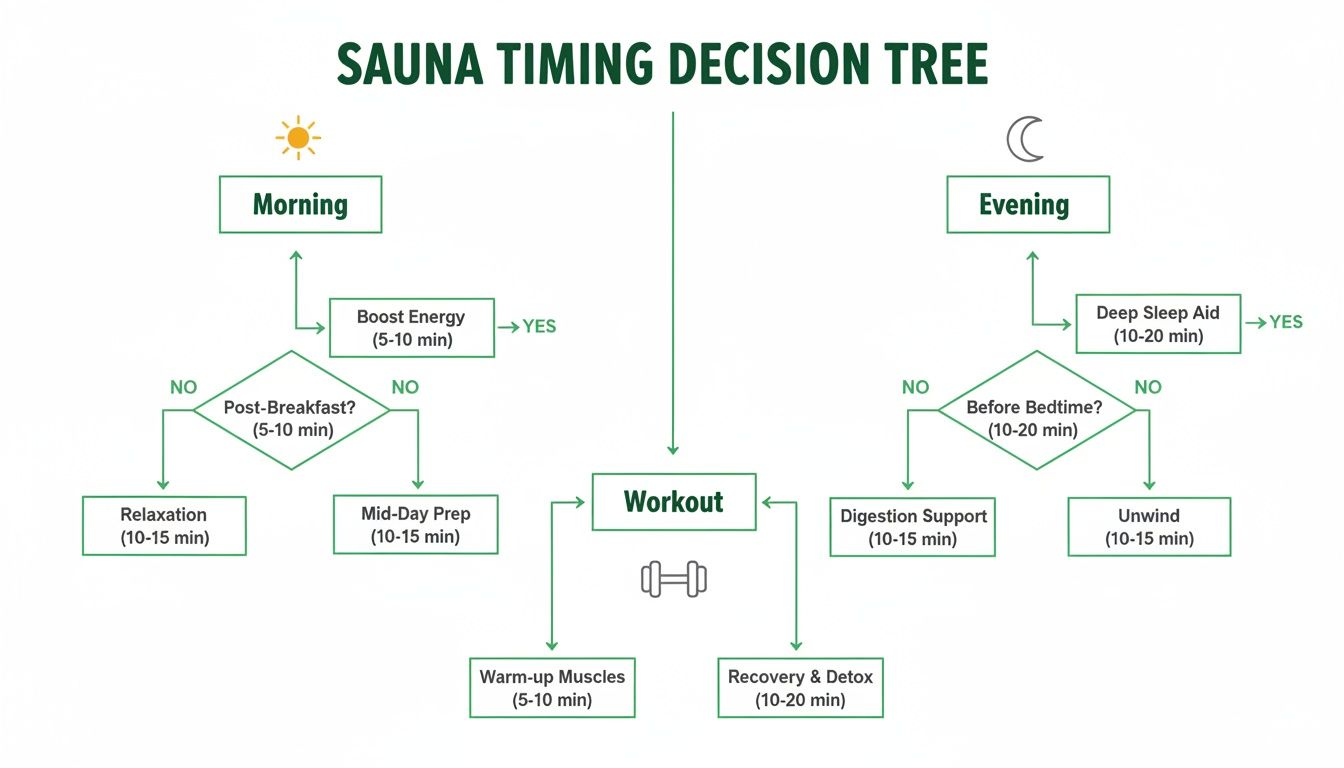
This decision tree highlights how morning, post-workout, and evening sessions fit into daily routines for optimized benefits.
Timing Cheat Sheet
- Morning Boost – Start with 10 minutes at 70–80 °C to energize without fatigue.
- Workout Recovery – Schedule 15–20 minutes right after training to ease soreness.
- Evening Wind-Down – Spend 20 minutes at a gentler heat (60–70 °C) to prepare for sleep.
- Flex Session – Whenever stress hits, step in for at least 10 minutes to reset.
When you’re ready to bring these routines home, explore Mande Spa Outdoor for US-made saunas with fast USA shipping—no lower-quality imports.
Understanding The Key Concepts
Stepping into a sauna is like wrapping your cells in a warm, welcoming blanket. Your heart picks up its pace and muscles begin to soften under the gentle heat.
Heat does more than make you sweat. It gives your cardiovascular system a boost, eases muscle tension, and quiets the mind. So picking the right time to sit in a sauna means tuning in to these natural responses.
Key Principles Of Sauna Heat
- Temperature Range: Traditional saunas run 60–100 °C, while infrared models sit at 45–60 °C—each offering a distinct level of heat stress.
- Humidity Level: Dry heat opens pores; steam ups the comfort for your lungs and deepens the sweat.
- Pacing: Start slow and build your tolerance over several sessions to avoid overheating.
These three factors form the backbone of any effective sauna routine.
Core Sauna Mechanics
When your body meets high heat, blood vessels widen—picture floodgates opening in a river. That surge in circulation delivers more oxygen and nutrients to your tissues.
Over time, the sustained warmth relaxes muscle fibers and eases built-up tension. This is why a well-paced sauna session leaves you feeling lighter and more limber.
Consistent pacing is the gateway to safe, sustained benefits.
Understanding this mechanism lays the groundwork for choosing the best time to sauna—whether you’re chasing recovery, aiming for serenity, or seeking sharpened focus.
Environmental Factors
Humidity and airflow shape your sweat session. In a traditional sauna, pouring water on the rocks shoots humidity sky-high. Infrared units, on the other hand, target your tissues directly with radiant heat.
| Factor | Effect On Body |
|---|---|
| High Humidity | Promotes sweat, clears airways |
| Dry Heat | Delivers steady, deep warmth |
| Infrared Rays | Penetrate muscles for recovery |
Tuning these variables helps you dial in the perfect session length and temperature.
Historical sauna traditions date back over 2,000 years in Northern Europe. From medieval smoke saunas to modern steam rooms, each iteration focused on cleansing and renewal. For an in-depth look at sauna history, see the Datainsights Market report.
When it’s time to decide when to use a sauna, these fundamentals will guide you. A morning session can jump-start circulation, while an evening routine promotes restful sleep.
With this foundation, you’ll know exactly how long to stay heated and when to cool down.
Next up: timing your sauna sessions around workouts and rest cycles.
Ready to customize and purchase your sauna? Visit Mande Spa Outdoor for premium, American-built saunas with fast USA shipping—no lower-quality imports.
Best Times For Sauna Use
Finding the perfect slot for your sauna session can transform it from a simple sweat to a precision wellness ritual.
Early birds and night owls alike can shape their routines around heat exposure to boost circulation, speed recovery, or wind down for the night.
- Morning Activation (6–9 AM): Ignite circulation and sharpen your focus before the day begins.
- Post-Workout Repair (30–120 Minutes After Exercise): Help muscles recover faster and calm inflammation.
- Evening Wind-Down (8–10 PM): Lower cortisol, ease tension, and prepare your body for restful sleep.
If you’d like more specifics on how to slot sauna sessions around your gym time, check out our detailed walkthrough on sauna timing before or after workouts.
Morning Heat Activation
Stepping into a sauna at dawn can feel like trading your morning coffee for a warm hug of steam.
As your heart rate climbs, blood floods to your brain just as it would during a light jog—only you stay rooted to the bench.
This gentle wake-up call sharpens your concentration and leaves you carrying a calm, energized buzz into your day.
“A morning sauna is like a shot of adrenaline with calm,” says endurance coach Laura Jensen.
Short sessions on a consistent schedule help you form a lasting habit—without draining your energy reserves.
Timing After Exercise
Slotting a sauna visit 30–120 minutes after training works with your body’s natural repair mechanisms.
Heat ramps up circulation, ferrying nutrients that rebuild muscle tissue. At the same time, it helps clear out lactate, so you’re less sore tomorrow.
- Cool down lightly for 5 minutes right after your workout.
- Rehydrate fully, adding electrolytes if you’ve sweated heavily.
- Relax in the sauna for 15–20 minutes at 70–80 °C.
Athletes report 73% faster recovery times when they stick to this post-exercise window.
Evening Unwind Routine
As evening falls, a sauna session can flip the switch from hustle mode to true relaxation.
Lower heat—around 60–70 °C—soothes your nervous system and nudges your sleep hormones into balance.
- Heat Session (20 Minutes): Quiet the mind and melt away the day’s tension.
- Cool-Down (5 Minutes): A brief chill-down seals in that relaxed feeling.
- Bedtime Buffer: Climb into bed within 30 minutes to ride the wave into deep sleep.
Seasonal Sauna Trends
Season matters more than you might think when it comes to sauna use and purchases.
In Northern Europe and North America, demand spikes in autumn and winter—historical sales climb 20–35% above average from October through February.
For a deep dive into market shifts and projections, check out the MetastatInsight sauna market report.
Trust Mande Spa Outdoor for reliable, USA-shipped saunas built domestically—not lower-quality imports. Shop now and secure your sauna before the winter rush.
Real Life Stories
Maria, a teacher and mother of two, sneaks in a 10-minute heat session at 7 AM. She says it helps her stay centered through morning meetings and playground chaos.
Jorge, an ultrarunner, steps in 45 minutes after his long training runs. Over the season, he’s noticed 85% fewer aches and much faster turnaround between workouts.
These examples show how flexible heat therapy can be—slot it around school drop-off, boardroom presentations, or long training days.
Trust Mande Spa Outdoor’s easy-install saunas for reliable, USA-shipped performance with no lower-quality imports. Purchase today for fast USA delivery and a lifetime warranty.
Sauna Duration And Frequency Guidelines
Finding the sweet spot for your sauna sessions can feel like tuning a finely crafted instrument. Get it right, and each visit becomes a powerful boost for your body and mind.
Research shows that 10–20 minute sessions at 70–100 °C in a traditional sauna—or 45–60 °C in an infrared model—hit the mark for most people. Aim for 2–3 sessions per week to support heart health. If you’re chasing deeper recovery and stress relief, dialing up to 4–7 sessions weekly yields even stronger benefits. Learn more about sauna and spa insights
- Traditional Sauna Sessions deliver rapid heat stress in 10–20 minutes.
- Infrared Sauna Sessions gently warm you over 10–20 minutes.
- Moderate Frequency (2–3 times weekly) boosts cardiovascular health.
- High Frequency (4–7 times weekly) deepens recovery and wellness.
Recommended Session Durations
Think of traditional saunas as sprint intervals: the air soars to 70–100 °C, and you break a sweat in minutes. Infrared units are more like a steady-paced jog, hovering around 45–60 °C and allowing heat to sink into muscles over time.
| Sauna Type | Temperature Range | Duration |
|---|---|---|
| Traditional | 70–100 °C | 10–20 minutes |
| Infrared | 45–60 °C | 10–20 minutes |
Beginners often start at 10 minutes, then gradually extend to 15–20 minutes. After each round, step out and rest for at least 5 minutes—it’s your body’s chance to reset and soak in the benefits.
Sample Weekly Schedules
A clear roadmap helps you stay on track and notice real changes.
| User Level | Weekly Sessions | Ideal Timing |
|---|---|---|
| Beginner | 2–3 sessions | Mon, Wed, Fri evenings |
| Fitness Enthusiast | 3–5 sessions | After workouts |
| Wellness Seeker | 4–7 sessions | Mornings and evenings |
“Consistency in sauna timing is what turns sessions into lasting habits,” notes wellness coach Mark Allen.
Read also: gain tips on ideal durations in our guide on how long to stay in a sauna.
Rest days matter just as much as heat days. In your first month, limit yourself to 4–5 sessions to help your body adapt without overdoing it.
Hydration And Rest Tips
Proper hydration is your ticket to feeling energized and avoiding the dreaded post-sauna slump.
- Pre-Session Hydration: Drink 500 ml of water 30 minutes before stepping in.
- Cooling-Off Breaks: Step outside for 5 minutes between rounds.
- Electrolyte Replenishment: Add minerals if you’re sweating buckets.
- Rest Day Strategy: Schedule at least one no-sauna day per week.
Think of each sauna visit as a training session for your cardiovascular system. Just like you vary intensity in workouts, alternate intense heat days with lighter, 10-minute cool-down sessions at around 50 °C.
For premium sauna experiences, visit Mande Spa Outdoor. Their high-quality units ship across the USA with no lower-quality imports and come backed by a lifetime warranty and expert support. Purchase your American-made sauna now.
Balancing Infrared And Traditional Sauna Benefits
Choosing a sauna is like picking between two paths to relaxation. One delivers a soft glow of warmth from within; the other wraps you in a powerful wave of steam or dry heat.
Infrared light slips beneath your skin like invisible hands, easing muscle tension at only 45–60 °C. Traditional saunas crank the air up to 70–100 °C, turning the cabin into a communal cocoon that clears your airways and sparks conversation.
-
Infrared Sauna Pros
• Deep, targeted muscle relief without scorching air temperatures
• Longer sittings that feel gentler on your system
• A quieter, more private environment -
Traditional Sauna Pros
• Humidity-rich steam for easier breathing
• Spacious setup perfect for groups
• Immersive heat that surrounds every inch of you
You might want to dive deeper—check our full breakdown of steam versus infrared saunas in this article: Steam vs Infrared Sauna Comparison.
Key Differences In Heat Delivery
Infrared warmth is like an invisible masseuse working below your skin’s surface. Traditional heat feels like stepping into a desert wind or a rolling cloud of steam—each approach has its own character.
| Aspect | Infrared Sauna | Traditional Sauna |
|---|---|---|
| Temperature Range | 45–60 °C | 70–100 °C |
| Heat Mechanism | Radiant infrared | Convective steam/dry |
| Session Duration | 15–20 minutes | 10–15 minutes |
| Ideal Setting | Solo, focused relief | Group, social rituals |
Choosing Based On Goals
Match your sauna choice to what you need most:
- Muscle recovery after a workout—opt for an infrared session at 50 °C.
- Respiratory relief—enjoy steam vents in a traditional sauna.
- Social downtime—gather friends in a roomy, dry-heat cabin.
- Evening wind-down—choose gentle, prolonged infrared warmth.
“Infrared heat sneaks deep into muscles, while traditional steam opens your airways,” notes sauna specialist Dr. Karen Hayashi.
Imagine an infrared unit as your cozy reading nook—quiet, focused, and soothing. A traditional sauna feels like a clubhouse where warmth flows and conversations spark.
Selecting Your Space Layout
Infrared panels slip into tight corners and need only modest ventilation. Traditional cabins demand more room and proper steam vents for comfort.
- Compact Footprint: Perfect for a home-gym corner
- Shared Experience: Seats two to four people comfortably
Both styles are crafted in the USA and ship quickly—no waiting on imports. When you’re ready to upgrade your heat therapy, visit Mande Spa Outdoor for USA-built infrared and traditional models, backed by fast USA shipping and uncompromising quality. Shop now and elevate your wellness routine.
Safety Precautions And Contraindications
Your well-being comes first whenever you plan a sauna session. If you’re running a fever, have consumed heavy alcohol, or are dealing with uncontrolled high blood pressure, it’s wiser to pause. This break gives your cardiovascular system a chance to settle and helps you avoid overheating.
If you’re pregnant, a senior, or managing a chronic health condition, check in with your doctor before stepping into the heat. A professional can fine-tune temperature and duration to suit your body’s needs, keeping your sessions both safe and effective.
Hydration And Cooling Checklist
Staying hydrated is essential for safe sauna use and optimal recovery.
- Pre-Session Hydration: Drink 500 ml of water at least 30 minutes before heat exposure.
- During Session: Sip small amounts every 5–10 minutes to keep fluid levels steady.
- Post-Session Rehydration: Replace lost electrolytes with a balanced drink or a light snack.
- Hydration Check: Aim for pale yellow urine as proof of proper hydration.
Cooling down matters just as much as warming up. Step outside for a 3–5 minute cooldown after each heat round. A lukewarm shower or a gentle fan breeze will help bring your core temperature back to normal.
Learn more about sauna use during illness in our sauna and illness guide.
Session Limits And Recovery Strategies
Most experts recommend capping each sauna session at 20–30 minutes to prevent heat stress. Beginners often start with 10–15 minutes and gradually extend their time over several weeks—much like easing into a new workout routine.
Follow this simple exit protocol after leaving the sauna:
- Stand quietly for 1–2 minutes, allowing your blood pressure to stabilize.
- Cool off with a fan or lukewarm shower for 3–5 minutes.
- Rest and hydrate in a comfortable spot for 10–15 minutes.
Think of a sauna visit as a quick sprint rather than a marathon. Those cooldown and rest periods? They’re where the real recovery happens.
“Consistent pacing and hydration transform heat into lasting benefits,” notes wellness coach Emma Reed.
Ready to invest in your well-being? Explore Mande Spa Outdoor’s premium wood saunas. All models ship across the USA, assembled domestically with no lower-quality imports. Visit Mande Spa Outdoor to find the sauna that fits your goals and enjoy fast shipping, expert support, and enduring quality.
Ensure you follow these precautions and contraindications before your next sauna session. Enjoy heat therapy safely and confidently.
Frequently Asked Questions
When Is the Best Time of Day to Use a Sauna for Recovery?
If you’re chasing an early-morning wake-up call, a quick session at sunrise can feel like a warm invitation to your day. Conversely, slipping into the sauna between 8 and 10 PM helps your muscles unwind and primes you for a restful night.
For focused post-workout repair, aim to heat up 30 to 120 minutes after exercise. During this window, your blood vessels are already dilated, so nutrient-rich blood reaches tired muscles more efficiently.
• Morning (6–8 AM): Gentle boost for daily energy
• Evening (8–10 PM): Prepares the body for deep sleep
• Post-Workout (30–120 Min Rest): Maximizes recovery
Can I Use a Sauna Immediately After a Heavy Workout?
Diving straight into heat can stress already fatigued muscles. Instead, give yourself a 5-minute cool-down, hydrate thoroughly, then enter the sauna.
• Cool down for at least 5 minutes
• Sip water or an electrolyte drink
• Set the sauna to 70–80 °C
• Keep the first sessions to 15–20 minutes
Beginner Sauna Start Guide
If you’re new to saunas, begin conservatively. Spend 10 minutes at around 60–70 °C, then rest for 5 minutes outside the cabin. Add 2–5 minutes each visit until you comfortably reach 15–20 minutes. Tracking your sessions in a simple checklist helps you see progress and fine-tune heat levels.
Pregnancy Safety Insights
Expectant mothers should always get sign-off from their healthcare provider first. If cleared, limit sessions to 10 minutes at under 60 °C, stay near a cooling spot, and keep sipping water. Exiting immediately at the first sign of dizziness or overheating is key for safety.
Always listen to your body and consult a professional before routine sauna use during special conditions.
All ships in the USA with no import compromise. Ready to choose your perfect sauna? Visit Mande Spa Outdoor and purchase the American-made sauna that transforms your wellness routine today.