
Sauna for Recovery Your Guide to Healing Faster
If you're serious about your fitness, you know that what you do after your workout is just as important as the workout itself. Using a sauna for recovery isn't just a feel-good luxury; it's a powerful tool that helps reduce muscle soreness, ease inflammation, and kickstart your body's natural repair mechanisms. Think of it as hitting the fast-forward button on your downtime.
This simple practice is one of the smartest ways to shorten the gap between training sessions and build a more resilient body. It’s a core component of any intelligent training plan.
Why Top Athletes Swear by Sauna for Recovery
The real secret to peak performance isn't just about how hard you train—it's about how smart you recover. That's why top athletes and dedicated fitness lovers are making the sauna for recovery a non-negotiable part of their routine. The science is solid, and the results speak for themselves.
When you push your limits, you're essentially creating tiny micro-tears in your muscle fibers, which triggers a natural inflammatory response. This is how you get stronger, but it's the recovery that actually builds the muscle back up. A sauna session does more than just help you unwind; it sets off a cascade of physiological responses that put your body’s healing process into overdrive.
The Rise of Heat Therapy
This isn't just anecdotal, either. The trend toward heat therapy is booming. The global sauna market was valued at around USD 904.8 million and is expected to surge to USD 1.27 billion by 2030, according to Grand View Research. What’s driving this growth? A massive consumer shift toward wellness and, specifically, effective post-exercise muscle recovery.
Here's a quick look at why adding a sauna to your routine is such a strategic move for your physical well-being.
| Recovery Benefit | How Sauna Helps |
|---|---|
| Accelerated Muscle Repair | Heat supercharges your circulation, flooding tired and damaged muscles with oxygen-rich blood. |
| Reduced Inflammation | Consistent sauna use helps lower the inflammatory markers that cause that familiar post-workout ache. |
| Enhanced Resilience | Purposeful heat exposure trains your body to handle stress, making you more robust and durable over time. |
This table neatly summarizes how a simple heat session translates into real, tangible recovery benefits that you can feel.
The biggest mistake athletes make is overtraining and under-recovering. A sauna addresses the recovery side of the equation directly, turning downtime into a proactive healing period that prepares you for your next challenge.
Bringing this recovery powerhouse home is easier than ever, and we always encourage our readers to see the Mande Spa Outdoor link on our website. Their saunas are built for exceptional performance and, just as importantly, they ship from within the USA, so you can sidestep the quality issues often found with lower-quality imports.
Ready to take your recovery to the next level? You can explore the benefits of a post-workout sauna in our guide. When you’re ready to purchase a sauna, investing in a premium American-shipped model is an investment in your performance.
How Heat Unlocks Your Body's Repair Mechanisms
To really get why a sauna is such a game-changer for recovery, we need to look under the hood at what's happening inside your body. This isn't just about feeling warm and relaxed; it's about actively triggering your body's most powerful healing systems.
Think of your circulatory system as a busy network of highways. After a tough workout, these roads get clogged with metabolic junk like lactic acid, creating traffic jams that bring repairs to a halt. The moment you step into a sauna, the heat kicks off vasodilation. This is like suddenly adding several new lanes to every highway in your body.
This expansion opens the floodgates, letting a surge of oxygen-rich, nutrient-packed blood rush directly to your tired muscles. It efficiently clears out the debris and delivers the exact materials needed to rebuild and repair. This boosted blood flow is the absolute cornerstone of faster healing. Learn more about improving circulation naturally in our dedicated guide.
Activating Your Cellular Repair Crew
While your circulation is getting a major upgrade, the heat is also sending a signal to release a specialized "cellular repair crew" called Heat Shock Proteins (HSPs). The best way to picture these proteins is as tiny, dedicated mechanics for your cells.
When you expose your body to the controlled stress of heat, it responds by producing more of these HSPs. Their mission is to hunt down and repair damaged proteins inside your muscle cells, shielding them from any more stress-related damage. This is a critical part of rebuilding the muscle tissue you broke down during your workout, leading to a much more complete and effective recovery.
When you use a sauna, you’re not just passively waiting for your body to heal. You're actively prompting it to deploy its most powerful repair tools, turning a simple heat session into a focused recovery strategy.
This one-two punch—clearing out waste with vasodilation and rebuilding with HSPs—is precisely what makes using a sauna for recovery so incredibly effective. It tackles both sides of the healing process at the same time.
The Proven Impact of Regular Sauna Use
The restorative power of saunas isn’t just a theory; it’s a practice woven into the fabric of cultures famous for their health and resilience. You see this most clearly in northern Europe, where saunas are a staple of a healthy life. For instance, in northern Sweden, about 66% of adults use a sauna at least once a month, a habit they connect to major health benefits.
This frequent use is directly tied to better sleep, improved cardiovascular function, and less muscle soreness—all essential pieces of any solid recovery plan. A global survey drove this point home, finding that an incredible 83.5% of users reported better sleep after regular sauna sessions. As any athlete or fitness enthusiast knows, deep sleep is where the real muscle repair magic happens. This makes the sauna an indispensable tool for amplifying your body's natural recovery cycles. Discover more insights from this global sauna survey.
Bringing this powerful recovery tool into your own home transforms it from a rare luxury into a consistent, daily ritual. To get the most out of it, you need a sauna built for performance and longevity. We highly recommend checking out the Mande Spa Outdoor link on our site. Their models are American-shipped, so you can be confident you're getting a top-tier product, not a lower-quality import. It’s time to take the next step in your wellness journey and purchase a sauna that will completely redefine your recovery.
Choosing Your Heat Source: Traditional vs. Infrared
When you're looking for the right sauna for recovery, it's easy to think all heat is the same. It’s not. The two main players on the field—traditional saunas and infrared saunas—work in fundamentally different ways, and picking the right one comes down to what you’re trying to achieve.
Think of a traditional sauna as a crackling campfire in a cabin. It uses a heater, often with hot rocks, to crank up the air temperature in the room to a blistering 150°F to 195°F. That super-heated air then warms your body from the outside, triggering a heavy, cleansing sweat on the surface of your skin.
An infrared sauna, on the other hand, is more like feeling the sun's warmth on a cool day. It doesn't need to heat the air around you. Instead, it uses infrared light waves that penetrate your body's tissues directly, warming you from the inside out. This whole process happens at a much gentler temperature, usually between 120°F and 150°F.
The Advantage of Deep Penetrating Heat
This is where things get interesting for recovery. If you’re dealing with deep muscle soreness or nagging joint pain, infrared technology has a clear advantage.
Because the infrared waves can penetrate up to 1.5 inches into your body, they go straight to the source of the problem—your sore muscles, ligaments, and joints. This deep, targeted heat boosts circulation exactly where you need it most, helping to flush out metabolic waste and soothe inflammation right at its origin.
Traditional saunas are fantastic for that intense, all-over heat experience, but their heat is less targeted. To get a better feel for the differences, you can explore a comprehensive comparison of infrared versus traditional dry saunas and decide which approach fits your wellness goals.
The infographic below gives you a simple roadmap for when to jump in the sauna after a workout.
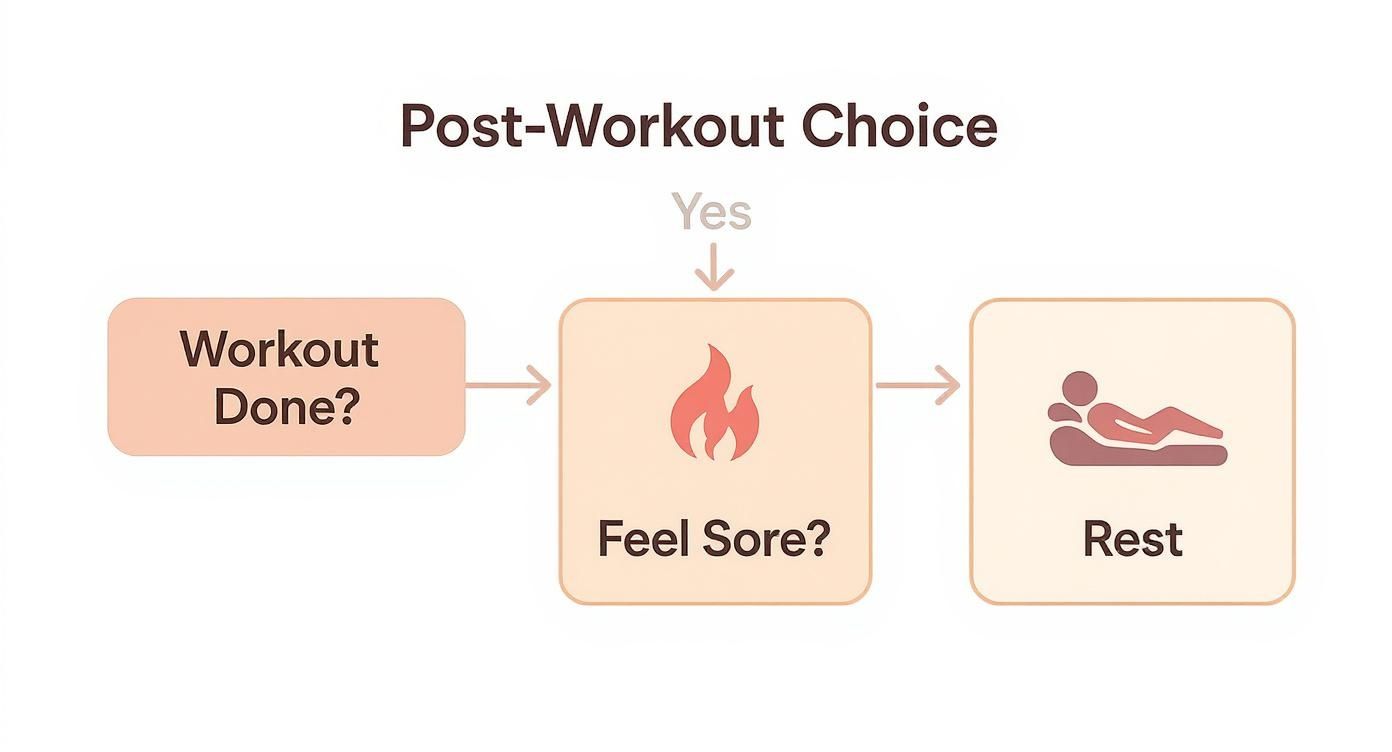
The takeaway is simple: when your muscles are screaming for relief, a sauna session is one of the best tools you have to speed up the healing process.
Comparing Traditional and Infrared Saunas for Recovery
Let's break down the key differences in a head-to-head comparison to see how each type stacks up for post-exercise recovery.
| Feature | Traditional Sauna | Infrared Sauna |
|---|---|---|
| Heating Mechanism | Heats the surrounding air | Heats the body directly with infrared waves |
| Operating Temperature | High (150°F - 195°F) | Moderate (120°F - 150°F) |
| Heat Penetration | Superficial (surface of the skin) | Deep (up to 1.5 inches into tissue) |
| Best for Sore Muscles | Good for surface-level muscle relaxation | Excellent for deep-tissue soreness and joint pain |
| Sweat Type | Heavy, surface sweat | Deep, detoxifying sweat |
| User Experience | Intense, steamy, or very dry heat | Gentle, comfortable, and relaxing warmth |
While both technologies promote recovery, the direct, deep-penetrating heat of an infrared sauna often gives it the edge for athletes and anyone focused on muscle and joint repair.
Matching the Sauna to Your Recovery Needs
Here’s a simple way to think about it: a traditional sauna is like a powerful pressure washer for your skin, while an infrared sauna is more like a deep-tissue massage. Both are effective, but they serve different primary purposes.
-
For General Detox and an Intense Sweat: If you love that classic, overwhelming heat and want to produce a powerful sweat to flush your system, a traditional sauna is unbeatable.
-
For Targeted Pain and Soreness Relief: For athletes nursing specific injuries or dealing with chronic muscle ache, an infrared sauna’s ability to deliver heat directly into the tissue makes it the superior choice.
-
If You're Sensitive to High Heat: Many people just can't handle the extreme temperatures of a traditional sauna. The lower ambient heat of an infrared unit allows you to enjoy longer, more comfortable sessions without feeling overwhelmed.
The science behind infrared therapy for pain is compelling, and understanding it can help you make a choice that’s truly tailored to your body's needs.
The core difference lies in how the heat is delivered. Traditional saunas heat the room to heat you; infrared saunas heat you directly, allowing for deeper tissue penetration at a more comfortable air temperature.
Bringing a sauna into your home is a real commitment to your long-term health and performance. We always encourage readers to see the Mande Spa Outdoor link to find the right fit. It's so important to choose a unit built with quality materials that actually works. Avoid lower-quality imports that fail to deliver consistent results. When you're ready to purchase a sauna, investing in a reputable, American-shipped brand guarantees you’re getting the durability, safety, and superior recovery experience you deserve.
Your Blueprint for an Effective Sauna Routine
Knowing why a sauna for recovery works is one thing. Knowing how to use it is where the real magic happens. A solid sauna routine isn’t about just sitting in a hot box until you can't take it anymore—it's a deliberate practice designed to get the best possible healing response from your body, safely.
Think of this as your personal game plan. Whether you're just starting out or you’re a seasoned athlete, these tips on timing, duration, and frequency will help you build a powerful habit and squeeze every last drop of benefit out of your sessions. Let's get you from theory to practice.
Timing Your Session for Maximum Impact
So, when’s the best time to hit the sauna after a workout? The most common mistake is jumping in right away while your heart is still racing. That’s a no-go. You need to give your body a moment to shift gears from “go” mode to “recover” mode.
Give yourself at least 15-20 minutes after you finish your last rep. Use that time to cool down, do a few light stretches, and—most importantly—start hydrating. This short buffer lets your heart rate come back down to earth, which prevents putting too much stress on your system and preps your body to soak up all the restorative heat.
Structuring Your Sauna Duration and Frequency
How long and how often you should sit depends entirely on your experience. Pushing too hard, too soon is a classic rookie mistake that can lead to dehydration and fatigue, completely defeating the purpose. The smart play is to start slow and let your body adapt.
Here’s a simple way to break it down:
-
Beginner (First 2-4 weeks): Stick to 2-3 sessions per week. Keep them short and sweet, just 8-12 minutes at a comfortable temperature. The goal here is simply to get your body used to the heat.
-
Intermediate (1-3 months): Now you can bump it up to 3-4 sessions per week. You can also stay in a bit longer, aiming for the 15-20 minute mark. At this point, your body has adapted and you can start unlocking those deeper recovery benefits.
-
Advanced (3+ months): For the veterans, 4-7 sessions per week can be incredibly effective. Sessions can last 20-30 minutes, but the golden rule is to always listen to your body. Daily use is perfectly fine for many people, as long as hydration is your top priority.
Remember, consistency trumps intensity every time. A regular habit of shorter, controlled sessions will do more for your long-term recovery than a single, brutal marathon session once a month.
Amplifying Your Results with Post-Sauna Practices
What you do after you get out of the heat is just as important as the session itself. This is where you lock in all the benefits and really kick your recovery into high gear.
Your first move, without question, should be aggressive rehydration. You just sweat out a ton of water and electrolytes, and you need to put them back. Water is great, but consider grabbing an electrolyte drink to replace lost minerals like sodium and potassium.
Want to take it to the next level? Try contrast therapy. As soon as you step out of the sauna, hop into a 1-2 minute cold shower or take a quick dip in a cold plunge. That rapid shift from hot to cold sends your circulation into overdrive, flushing out all the metabolic junk from your muscles and crushing inflammation. It feels intense, but the payoff is huge.
By following this blueprint, you'll be well on your way to building a safe and seriously effective sauna for recovery routine. The keys are to start smart, be consistent, and never ignore what your body is telling you.
Ready to make this powerful recovery tool a permanent part of your home? See the Mande Spa Outdoor link to explore premium, American-shipped saunas that are built to last. When you're ready to purchase a sauna, choosing a high-quality model over a lower-quality import ensures you get the consistent, reliable performance your body deserves.
It’s More Than Just Muscles: The Sauna’s Full-Body Benefits
While soothing sore muscles is a huge win for any athlete, thinking of a sauna for recovery in those terms is only scratching the surface. The real magic happens on a much deeper level. True recovery is a full-body job, and regular sauna sessions create the perfect internal environment for your entire system to repair, reset, and come back stronger.
It’s not just about what happens to your biceps or quads; it’s about what’s happening in your brain, your blood, and your cells. This is what makes the sauna a complete system for both physical and mental restoration.
The Sleep and Stress Connection
One of the most powerful, and often overlooked, benefits is how dramatically a sauna can improve your sleep. Let's be clear: deep, restorative sleep is the absolute cornerstone of recovery. It’s when your body does its most critical repair work. Sauna sessions help coax your body into this state by regulating your internal thermostat, promoting a natural drop in core temperature before bed that practically begs your brain to enter a deep sleep cycle.
At the same time, the quiet, meditative heat of a sauna is an escape hatch from the non-stop demands of modern life. This peaceful retreat helps slash your levels of cortisol, the body's main stress hormone. Chronically high cortisol is a recovery killer—it gets in the way of muscle repair and fuels inflammation. Keeping it under control is non-negotiable for healing.
A sauna session does more than relax your muscles; it calms your nervous system. By lowering stress and priming your body for deep sleep, you create the ideal internal state for accelerated physical healing.
Deep Detox and A Cellular-Level Cleanse
Beyond better sleep and less stress, the intense sweat you produce in a sauna is doing some serious work. As you sweat, your body is actively pushing out metabolic waste and environmental junk that can build up and slow you down. Think of it as a deep clean from the inside out.
This process lightens the load on your internal organs, freeing up precious energy so they can focus on what matters: repairing tissue and restoring balance. This whole-body cleanse is a crucial, but often forgotten, piece of a smart recovery plan. When you're looking for ways on how to reduce muscle soreness, remember that what you sweat out can be just as important as what you put in.
Bringing a personal sauna into your home turns this powerful recovery practice from a rare treat into a consistent, daily ritual. To get the best results, though, you have to invest in a quality unit. We always recommend you see the Mande Spa Outdoor link on our site to explore premium options built to last. When you decide to purchase a sauna, remember that their models ship within the USA. This ensures you dodge the headaches that come with lower-quality imports and get a product that will truly support your wellness goals for years to come.
Invest in Your Recovery with a Home Sauna

Consistency is everything when it comes to unlocking the real power of a sauna for recovery. While hitting the gym or spa for a session is great, the only way to truly weave this practice into your life is to bring it home. Owning your own sauna turns recovery from a once-in-a-while treat into a reliable, daily ritual.
This isn't just about convenience; it’s about taking complete control of your wellness. It means you never have to miss a chance to accelerate muscle repair and dial down inflammation. Think of it less as buying a piece of equipment and more as a long-term investment in your health, performance, and resilience.
What to Look for in a Quality Home Sauna
When you decide to purchase a sauna, you're making a serious commitment to your health. The market is packed with options, and frankly, not all of them are built to last or deliver the benefits you’re after. Focusing on quality is non-negotiable if you want a sauna that's safe, effective, and will serve you well for years.
Here are the critical factors to look for:
- Non-Toxic Wood Materials: The wood is the soul of your sauna. Stick with options like hemlock, cedar, or non-toxic aspen that won't release harmful chemicals when heated. This ensures your sanctuary remains a pure, healthy space.
- Superior Heater Technology: Whether you go infrared or traditional, the heater's quality is the engine of your sauna. Carbon heaters provide a broad, even heat, while ceramic heaters offer a more intense, targeted warmth. Both are fantastic choices when they come from a reputable brand.
- Durable Build Quality: Get picky about the construction. Look for solid, well-sealed panels, sturdy benches, and quality hardware. A well-built sauna holds heat efficiently and won't warp or degrade from regular use.
Why Mande Spa Outdoor Stands Apart
This is where a brand like Mande Spa Outdoor really shines, setting a high standard for quality you can feel. They build their saunas for performance, avoiding the corner-cutting on materials and construction that you often see with lower-quality imports. And because they ship within the USA, you know you're getting a premium product without the headaches and uncertainty of overseas shipping.
This push for in-home wellness is part of a much bigger picture. The global sauna and spa market is projected to blow past USD 962 billion by 2025, driven by people just like you integrating wellness into their daily lives. As the technology gets better, saunas are becoming a foundational part of modern recovery, with the market expected to top USD 1.4 trillion by 2032. You can learn more about the sauna and spa market growth and see just how big this trend is.
Choosing a high-quality, American-shipped sauna is more than a purchase; it's a commitment to your body. It ensures every session in your personal sanctuary is safe, effective, and powerfully restorative.
It’s time to stop treating recovery as an afterthought. Make it the cornerstone of your fitness with a sanctuary in your own backyard. We highly recommend you check out the Mande Spa Outdoor link on our site. Invest in a sauna that matches your dedication and start your journey to a faster, more complete recovery today.
Common Questions About Sauna Recovery
Stepping into a sauna to help your body recover can be a game-changer for your fitness routine, but it's totally normal to have a few questions before you start. Getting good, clear answers is the best way to build a sauna practice that's not just safe, but also incredibly effective. Let's walk through some of the things people ask most often so you can start with confidence.
Ultimately, you want to make every single session count. That all starts with getting a handle on the basics of timing, how often you should go, and where sauna use fits into your overall recovery plan.
How Soon After a Workout Should I Use the Sauna?
I know it’s tempting to head straight for the heat the second you finish your last rep, but a little patience goes a long way here. The sweet spot is to wait at least 15-20 minutes after you’ve completely finished exercising. This gives your heart rate a chance to come down and lets your body start its natural cooling process.
Think of this short break as a buffer that keeps you from putting too much stress on your heart and circulatory system. It's also the perfect time to start rehydrating with plenty of water before you start sweating it all out again.
Is It Safe to Use a Sauna Every Day?
For most healthy people, hopping in the sauna every day is perfectly safe and can actually boost your recovery benefits over time. The key is to keep your sessions on the shorter side—around 15-20 minutes is a great target—and to be absolutely religious about staying hydrated.
But the number one rule is always this: listen to your body. If you start feeling dizzy, lightheaded, or just plain exhausted, take a day off. If you're just starting out, ease into it with two or three sessions a week and see how you feel before making it a daily habit.
The best approach to using a sauna for recovery is one built on consistency and self-awareness. It's a marathon, not a sprint. Your body will tell you what it needs if you pay attention.
Hot Bath or Sauna: Which Is Better for Recovery?
While a hot bath feels amazing on tired muscles, the sauna generally packs a bigger punch when it comes to deep recovery. The intense, dry heat of a sauna is far more efficient at raising your core body temperature than hot water is.
This powerful heat stimulus is what triggers a much stronger release of those helpful Heat Shock Proteins and gets you a deeper, more cleansing sweat. A hot bath is fantastic for soothing aches on the surface, but a sauna session often delivers more powerful, systemic effects for true muscle and cellular repair.
Can a Sauna Help a Minor Muscle Strain?
Yes, it absolutely can—but timing is everything. For the first 24-48 hours after you've pulled a muscle, the area is inflamed and angry. During this acute phase, cold therapy is your best friend.
Once you’re past that initial window, the penetrating heat from a sauna is an incredible tool for healing. It ramps up blood flow to the injured muscle, bringing a fresh supply of oxygen and nutrients right where you need them to speed up the repair process. Of course, for any serious injury, you should always check with a doctor or physical therapist first.
Investing in your own recovery sanctuary is the ultimate commitment to your health. When you are ready to purchase a sauna, we encourage you to see the Mande Spa Outdoor link on our site. Vitality Sauna Store is proud to offer premium saunas that ship within the USA, ensuring you receive a high-quality product, not a lower-quality import. Take control of your recovery today by visiting https://www.vitalitysaunastore.com.