
Navigating the Real Risks of Infrared Saunas
As the interest in at-home wellness grows, so does the desire for daily rituals that support both body and mind. Steam saunas are a time-tested, scientifically supported practice that is now more accessible than ever, offering a powerful way to invest in your health right from the comfort of home. At its core, steam bathing delivers profound benefits: it enhances detoxification through sweat, boosts circulation for better recovery, promotes clear and radiant skin, eases respiratory pathways for deeper breathing, and offers a quiet sanctuary for mental clarity. These aren't just feelings; they are physiological responses backed by simple science, helping to build trust in this ancient practice.
After establishing the value of steam saunas, it's clear why choosing the right brand is crucial. MandeSpa brings this transformative experience to life, not just as a product, but as a commitment to excellence. Positioned as the expert, MandeSpa is defined by its dedication to superior quality materials, elegant and thoughtful design, and unparalleled engineering. Each MandeSpa sauna is crafted for both peak performance and aesthetic beauty, designed to be a seamless, sophisticated addition to any modern home. Practical concerns like energy efficiency, user safety, and ease of use are meticulously addressed, reinforcing the brand’s premium standing and ensuring your wellness investment is a sound one.
Embracing Wellness While Understanding the Risks

Bringing an infrared sauna into your home is a deeply personal step on your wellness journey. For so many, it becomes the cornerstone of their self-care ritual, a daily retreat for everything from soothing sore muscles to finding a moment of mental peace. But a truly wise wellness path is one where you see the whole landscape—the sunny peaks and the potential valleys.
That’s why we’re tackling the risks head-on, right from the start. Our goal is to empower you with the knowledge you need to step into your sauna with total confidence. True wellness is built on awareness, and understanding how to use your sauna safely is what transforms it from a simple product into a powerful lifelong habit.
The Most Common Risks of Infrared Saunas
Let's get right to it. The biggest thing to watch out for is your body's reaction to the intense, penetrating heat. Infrared saunas are designed to make you sweat—a lot. That deep, detoxifying sweat is where so many of the benefits come from, but it also means your body is losing critical fluids and electrolytes. If you don't manage this, you can run into trouble.
The main culprits are overheating and dehydration. In an infrared sauna, the air temperature typically hits a comfortable 45°C to 60°C (113°F to 140°F), but the radiant heat warms your body directly from the inside out. This is what causes that profound sweat. Pushed too far, this can lead to heat exhaustion or even heat stroke. While generally very safe, medical reports have documented rare cases of burns, fainting, and falls, reminding us that mindfulness is key.
Why a Proactive Approach to Safety Matters
Thinking about safety doesn't take away from the magic of a sauna session; it actually amplifies it. When you know how to prepare your body, listen to its signals, and choose a well-made sauna, you turn every session into a secure, rejuvenating experience. It frees you up to truly relax and heal, without a flicker of worry in the back of your mind.
For a quick overview of what to look out for, here’s a simple table breaking down the most common risk factors and how to stay ahead of them.
Infrared Sauna Risk Factor At a Glance
| Risk Factor | Primary Concern | Key Safety Measure |
|---|---|---|
| Dehydration | Loss of essential fluids and electrolytes through intense sweating. | Hydrate well with water and electrolytes before, during, and after your session. |
| Overheating (Hyperthermia) | Core body temperature rising to unsafe levels, leading to heat exhaustion or stroke. | Start with shorter sessions (15-20 mins) at lower temperatures and listen to your body. |
| Cardiovascular Strain | Increased heart rate and blood flow, which can be risky for those with pre-existing heart conditions. | Consult a doctor before use if you have any cardiovascular health concerns. |
| Medication Interference | Heat can alter the body's absorption and processing of certain prescription drugs. | Discuss sauna use with your doctor or pharmacist if you are on medication. |
| Skin Sensitivity | Prolonged exposure to intense infrared heat can cause irritation, rashes, or minor burns in sensitive individuals. | Keep a safe distance from heaters and stop if you feel any skin discomfort. |
This table is your starting point for building a safe routine. By keeping these points in mind, you're already well on your way to a positive experience.
To really get the most out of your sauna, it helps to understand how the technology works its magic. We've put together a guide that explains what infrared sauna therapy is and why it's so different from a traditional steam room.
By taking the time to learn, you're not just using a sauna—you're mastering it. You're taking complete control of your well-being, and this guide is the first step toward ensuring every single session is as safe as it is sensational.
Staying Ahead of Dehydration and Heat Stress
Think of your body like a high-performance engine. Proper hydration is the coolant that keeps everything running smoothly. Inside the deep, penetrating warmth of an infrared sauna, your body is working hard, and you’re going to sweat—a lot. While this is fantastic for detoxification, it also means you're losing significant fluids and vital electrolytes, which brings us to one of the most common and preventable risks of sauna use.
This rapid loss of fluid can easily lead to dehydration if you're not careful. When you're dehydrated, your body just doesn't have enough water to do its job. Your blood volume can actually decrease, which forces your heart to pump harder to circulate blood. This extra strain is the first step toward heat stress, which can manifest as heat exhaustion or, in a worst-case scenario, heat stroke. Learning how to manage this isn't just a helpful tip; it's the foundation of a safe and beneficial sauna practice.
Recognizing the Early Warning Signs
Your body is incredibly good at telling you when something is wrong. The trick is learning to listen. Ignoring the first whispers of dehydration or heat stress can quickly turn a healing session into a harmful one.
Keep an eye out for these signals during your sauna time:
- Dizziness or Lightheadedness: Feeling woozy or off-balance is often the very first sign that fluid loss is affecting your blood pressure.
- A Nagging Headache: A throbbing head can be a clear sign of both dehydration and the beginnings of overheating.
- Suddenly Stopping Sweating: This is a serious red flag. If you go from sweating heavily to suddenly feeling dry, it means your body's internal thermostat is failing. Get out immediately.
- Nausea or Muscle Cramps: These symptoms often point to a serious imbalance in your electrolytes, like sodium and potassium.
If you feel any of these things, your session is over. No exceptions. Step out, cool down, and start rehydrating right away.
"Managing your body's response to heat is the cornerstone of safe sauna use. Proactive hydration isn't just about drinking water; it's about preparing your system to handle the thermal load effectively, ensuring every session strengthens you rather than strains you."
Your Hydration Protocol Before, During, and After
A great sauna session starts hours before you even open the door and doesn’t end until long after you’ve cooled down. By creating a simple hydration ritual, you can all but eliminate the risks we've just talked about. Staying properly hydrated is non-negotiable, and using reliable water containers for effective hydration can help you stick with the plan.
Here’s a simple three-step approach that works wonders:
- Pre-Hydrate: In the hours before your sauna, make a point to drink up. Aim for at least 16-20 ounces of water an hour or two before you get in.
- Hydrate During: Don't go in empty-handed. Bring a water bottle with you and take small, steady sips throughout your session. Don't wait until you're thirsty—by then, you're already behind.
- Rehydrate After: You’re not done when the timer goes off. Keep drinking water to replace everything you lost through sweat. A great pro-tip is to add a tiny pinch of sea salt or a good electrolyte powder to your water to get those essential minerals back into your system.
If you’re looking for more detailed advice on timing your sessions, our guide on how long to stay in an infrared sauna is the perfect next read. By making these simple steps a non-negotiable habit, you’re setting yourself up to enjoy every single benefit your sauna has to offer, safely and effectively.
Who Should Proceed with Caution or Avoid Saunas
An infrared sauna can be an incredible ally on your path to wellness, but its powerful effects mean it’s simply not the right tool for everyone. Truly understanding the potential risks starts with knowing when to hit the pause button and have a conversation with a professional. For some, the thermal stress from a sauna session could do more harm than good.
This isn't meant to scare you away, but to build a healthy respect for the profound physiological shifts that heat therapy sets in motion. Your safety is everything. Making an informed decision is the most powerful first step you can take before stepping into the warmth.
Individuals with Cardiovascular Conditions
Your heart and circulatory system get a real workout during a sauna session. As your body warms up, your heart rate can climb to between 100-150 beats per minute—a lot like the effect of a brisk walk or light jog. At the same time, your blood vessels open up to help cool you down, which naturally affects your blood pressure.
For a healthy person, this is a fantastic, gentle workout for the cardiovascular system. But if you're managing certain heart conditions, this extra demand can be a real risk.
- Recent Heart Attack or Stroke: If you're recovering from a major cardiovascular event, your system is in a delicate healing phase. The increased workload from a sauna could be far too strenuous.
- Unstable Angina: This condition is a sign that your heart isn't getting enough blood, leading to unpredictable chest pain. The stress of a sauna could easily trigger an episode.
- Severe Aortic Stenosis: When the heart's aortic valve is narrowed, blood flow is already restricted. The circulatory changes in a sauna can make this problem worse.
- Uncontrolled High Blood Pressure: While saunas can be great for blood pressure over the long haul, the immediate shifts in circulation can be risky if your hypertension isn't well-managed.
It's simple: if you have any history of heart disease, always talk to your cardiologist before even considering a sauna. Their guidance is the only way to ensure your safety and well-being.
The infographic below offers a clear, simple guide to proper hydration—a non-negotiable step for everyone, but especially for those managing underlying health conditions.
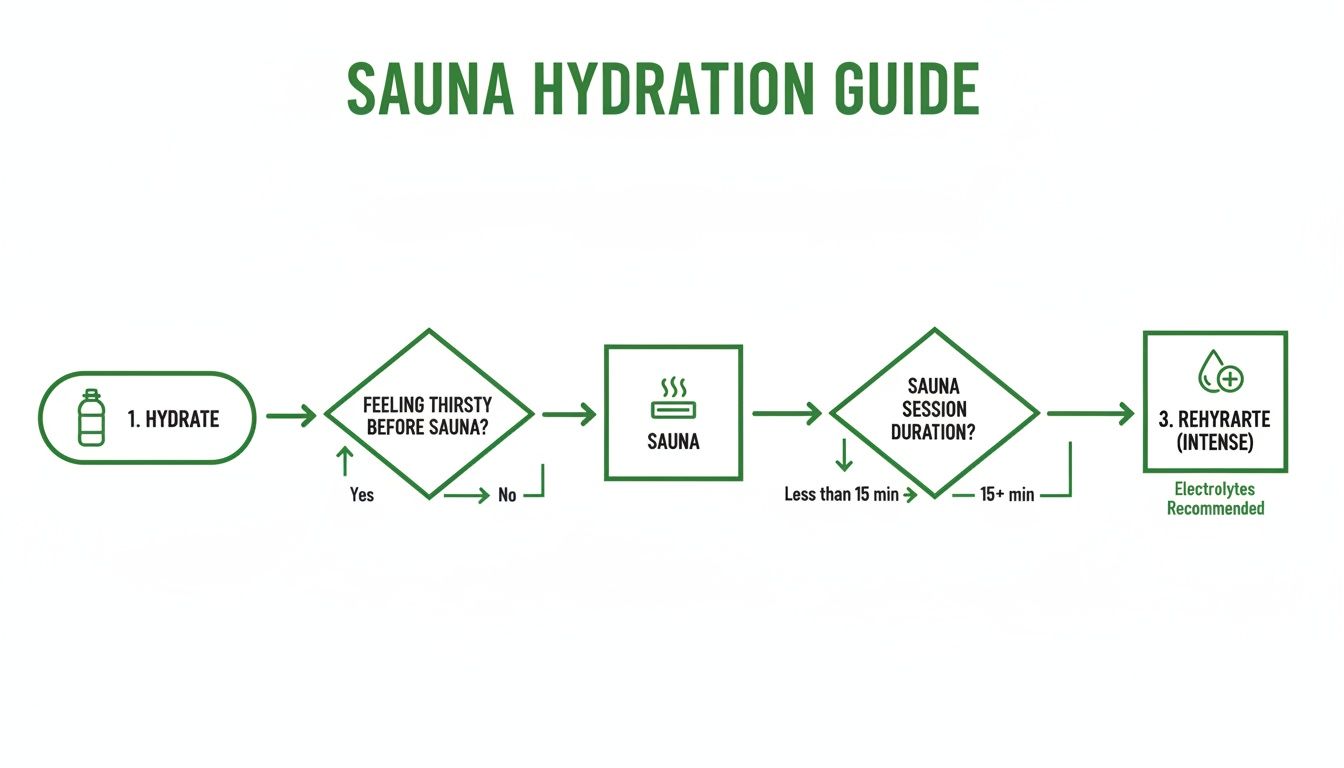
Think of hydration not as a mere suggestion, but as a fundamental safety requirement. It's the best way to prevent putting unnecessary strain on your body.
Other Health Considerations and Contraindications
Beyond the heart, several other conditions and life stages call for extra caution. Your body's ability to regulate temperature and handle stress can change dramatically, turning what should be a therapeutic session into a potential hazard.
Pregnancy Elevating your core body temperature too much during pregnancy, particularly in the first trimester, has been linked to potential developmental concerns. The overwhelming consensus is that it's best for pregnant individuals to avoid saunas entirely to eliminate any possible risk.
Certain Medications Many common medications can throw a wrench in your body's ability to handle heat or stay hydrated.
- Diuretics: These already increase fluid loss, and when you add profuse sweating to the mix, dehydration becomes a serious risk.
- Antihistamines and Anticholinergics: These can actually reduce your ability to sweat, which is your body’s primary way of cooling itself down.
- Beta-Blockers and other Blood Pressure Meds: These can alter your heart rate and blood pressure responses, making your body's reaction to the heat unpredictable and potentially unsafe.
Heat Sensitivity and Neurological Conditions For individuals with conditions like multiple sclerosis (MS), a rise in body temperature can lead to a temporary flare-up of symptoms. This effect, known as Uhthoff's phenomenon, is usually short-lived but can be quite distressing and create an unsafe situation.
Making a smart, informed choice is the foundation of a safe and effective wellness journey. If you're ready to invest in a sauna designed with uncompromising quality and safety, explore the Mande Spa Outdoor collection. These premium saunas are built in the USA with superior, non-toxic materials, ensuring you get the purest wellness experience. They ship directly within the USA, so you can trust you are not receiving a lower-quality import. Purchase your personal sanctuary today and elevate your home and health.
Understanding Eye Safety and Infrared Exposure
When we talk about infrared saunas, our minds often jump to the amazing benefits for our muscles, skin, and circulation. But a truly holistic approach to wellness means we look at the whole picture—and that includes something we can't afford to overlook: our eye health. Understanding how different types of infrared light interact with our eyes isn't meant to cause alarm. It's about empowerment.
This knowledge gives you the power to enjoy every single session with complete peace of mind. By making a few simple, smart choices, you can protect your long-term vision while soaking up the incredible healing potential of infrared therapy. Your journey to well-being should nurture every part of you, and that absolutely includes your precious eyesight.
The Difference Between Near and Far Infrared Light
It’s easy to think of "infrared" as one single thing, but it's not. This distinction is absolutely crucial when it comes to eye safety. Most wellness saunas you'll encounter are built around far-infrared (FIR) technology. FIR uses a longer wavelength that's fantastic at penetrating deep into the body to create that cleansing, detoxifying sweat, all without making the air around you uncomfortably hot.
The real conversation around eye safety starts when we talk about near-infrared (NIR) light. NIR has a shorter wavelength and is often added to "full-spectrum" saunas for its targeted benefits, like boosting collagen and helping with wound healing. However, this is the very type of light that demands our mindful attention. You can dive deeper into the difference between near and far infrared to get a clearer picture of how each one works.
Your wellness journey is a beautiful commitment to yourself, and part of that commitment is making informed choices. Protecting your eyes is a simple, powerful act of self-care that ensures your sauna practice supports your health holistically for years to come.
The Science Behind Protecting Your Eyes
The lens of your eye is an incredibly sensitive structure. Research has drawn a clear line between long-term, unprotected exposure to near-infrared radiation and an increased risk of developing cataracts. This isn't just a minor concern; cataracts are the world's leading cause of blindness, affecting a staggering 94 million people globally.
Studies looking at industrial workers who were exposed to high levels of NIR for many years found they had significantly higher rates of cataracts. This has led experts to confirm that even chronic, low-level exposure—the kind you might get from a full-spectrum sauna—can contribute to this risk over time. It just highlights how vital protective measures truly are.
Practical Steps to Safeguard Your Vision
The good news is that protecting your eyes is beautifully simple. It doesn't require a complicated routine, just a few mindful habits that allow you to fully relax and sink into your sauna experience. Just as in other areas of life, learning some solid eye protection strategies makes all the difference.
Here are a few easy yet incredibly effective habits to fold into your routine:
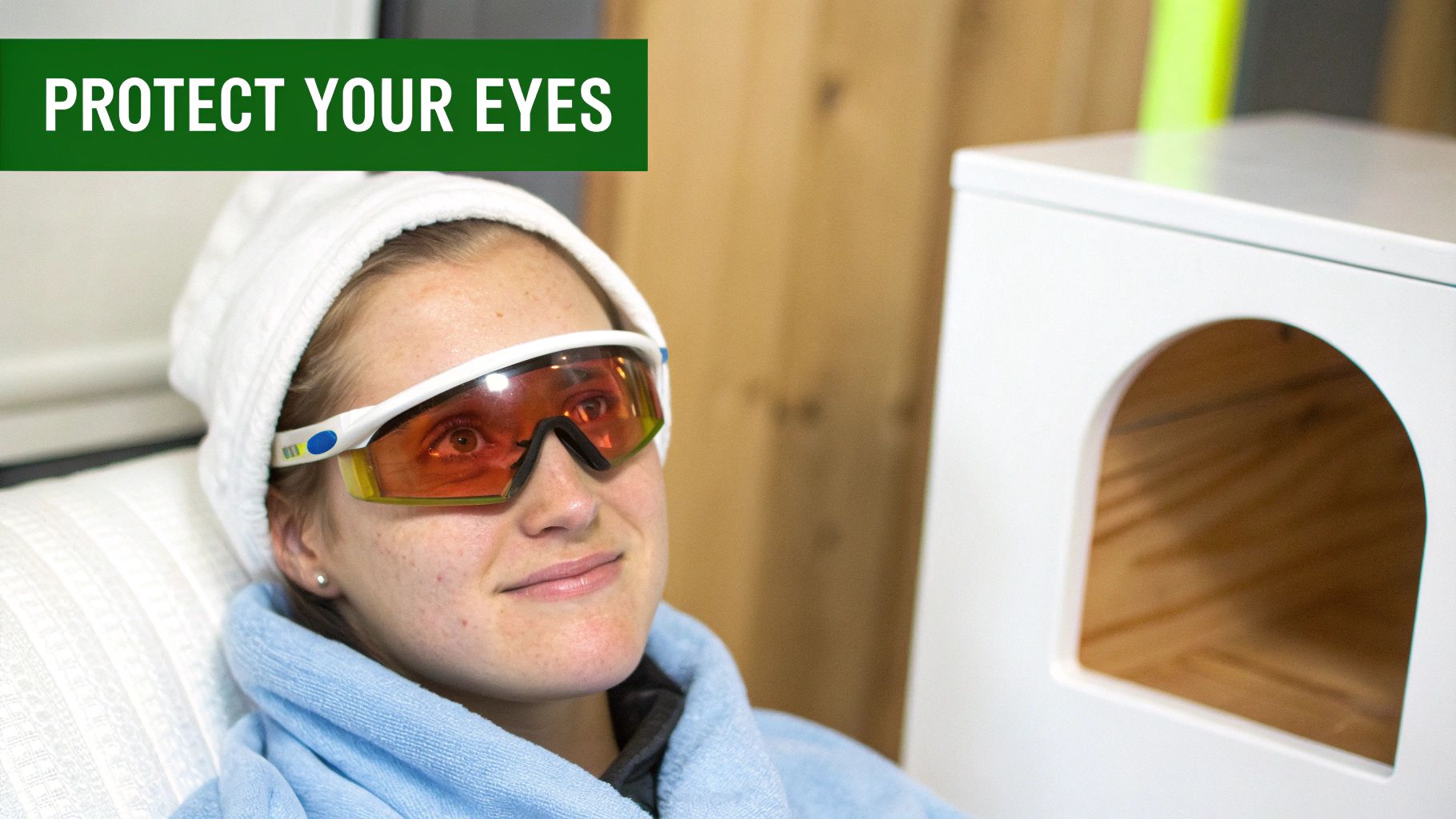
- Use Protective Eyewear: This is non-negotiable. If you own or use a full-spectrum sauna with NIR heaters, wearing specially designed NIR-blocking goggles is the single most effective step you can take.
- Keep Your Eyes Closed: A simple yet powerful practice. Just closing your eyes during your session not only protects them but also transforms your sauna time into a deeply meditative retreat.
- Position Yourself Wisely: Make a conscious effort to avoid staring directly into any infrared heater, especially if it's a near-infrared emitter. Angle your body so the light is warming your body, not shining directly into your face.
By adopting these small habits, you essentially transform a potential risk into a complete non-issue. It’s an empowering way to take full ownership of your health, ensuring every moment you spend in your sauna is nothing but pure, restorative bliss.
Why Your Sauna's Quality Is Your Best Safety Feature
As you move deeper into your wellness journey, you start looking for those daily rituals that truly nourish your body and calm your mind. A steam sauna isn't just a trend; it's a practice backed by centuries of tradition and modern science, now easier than ever to bring into your own home as a personal sanctuary for renewal. This ancient wisdom is built on some pretty amazing health benefits.
At its heart, steam bathing is about deep, cleansing detoxification through sweat, helping to flush out impurities and leaving you with an incredible feeling of freshness. That enveloping warmth also gets your circulation going, sending oxygen-rich blood to every corner of your body to speed up recovery and boost your vitality. It's a fantastic treatment for your skin, promoting a clear, glowing complexion, and it can help open up your airways for deeper, more peaceful breathing. But beyond all the physical perks, the simple act of a sauna session creates a powerful space for mental clarity and genuine relaxation.
The Hidden Dangers in Low-Quality Saunas
When people talk about the risks of infrared saunas, the conversation usually revolves around how you use them. But honestly, one of the biggest dangers—and one that’s so often missed—is the sauna itself. The market has been flooded with cheaply made imports that cut corners on quality to offer a tempting price tag, but your health often pays the real price.
Many of these bargain saunas are pieced together with cheap plywood, particleboard, and toxic glues that release nasty volatile organic compounds (VOCs) when they heat up. So instead of breathing in pure, restorative steam, you could be inhaling formaldehyde and other chemicals. This completely defeats the purpose of detoxification and actually adds a toxic load to your system. This "off-gassing" is a serious problem that can turn a tool for wellness into a hidden health hazard.
A sauna should be a space of absolute purity. Investing in a unit built with non-toxic, premium materials isn't a luxury—it's the fundamental requirement for a safe and effective wellness practice. Your sanctuary should heal you, not expose you to hidden toxins.
EMFs and Engineering: The Unseen Risk Factors
Beyond the materials you can see and touch, there are invisible risks hiding in the electrical components. Electromagnetic fields (EMF) are a growing concern for many, and unfortunately, low-quality infrared heaters can blast out high levels of EMF radiation. While the science on the long-term effects is still evolving, many health-conscious people rightly choose to minimize their exposure. You can learn more about why low-EMF saunas are important and what to look for.
On top of that, shoddy engineering in these saunas often leads to uneven heating, questionable wiring, and a much shorter lifespan. This makes them not just less effective, but a potential safety issue. The quality of the craftsmanship is directly tied to your safety and the results you'll get. This is exactly where a commitment to excellence becomes your best defense against the hidden risks of infrared saunas.
MandeSpa: The Commitment to American Quality
This is precisely why choosing a brand with an unwavering commitment to quality is your most powerful safety feature. MandeSpa stands as an expert in the field, dedicated to superior materials, elegant design, and engineering excellence. We understand that a sauna is more than just a hot box; it's a seamless addition to a modern home and a cornerstone of an intentional wellness lifestyle.
Our premium saunas are built right here in the USA, ensuring they are not lower-quality imports. They feature:
- Non-Toxic Materials: We use high-grade, natural woods and avoid toxic glues to ensure the air you breathe is pure and clean.
- Low-EMF Technology: Our heaters are engineered for performance and safety, minimizing EMF exposure for a worry-free experience.
- Energy Efficiency & Durability: MandeSpa saunas are built for both performance and beauty, engineered to be energy-efficient and last for years of daily renewal.
Choosing MandeSpa is an investment in your well-being and peace of mind. As you consider bringing this powerful ritual into your life, the quality of your sauna is paramount. We invite you to explore the Mande Spa Outdoor collection. Discover the difference American craftsmanship makes and create a personal sanctuary you can trust. Purchase your sauna today and elevate your home and your health with confidence.
A Practical Guide to Safe and Effective Sauna Use
True mastery of your sauna comes from understanding how to use it safely. This knowledge is what elevates a simple wellness tool into a profound and sustainable daily ritual. When you know the principles of safe use, you can step into the warmth with total confidence, knowing you’re in the driver's seat.
Think of these guidelines as the missing manual for unlocking your sauna’s full potential. They’re not just rules; they're the keys to building a rewarding, long-term practice that will nurture your well-being for years to come.
The Golden Rules of Sauna Practice
Your journey into heat therapy is a marathon, not a sprint. The most common mistake people make is going too hard, too fast, which can easily lead to unnecessary risks like heat stress. The secret is to introduce your body to the heat gradually, giving it the time it needs to adapt.
Start with a mindset of patience and awareness. Your body knows exactly what it needs, and your only job is to learn how to listen.
Your Starting Point: A Step-by-Step Guide
- Start Low and Go Slow: For your first few sessions, keep the temperature on the lower end, around 120°F–130°F. Limit your time inside to just 10–15 minutes. This gentle introduction lets your body get comfortable without feeling overwhelmed.
- Gradually Increase Duration: Once that feels easy, start adding five minutes at a time. Slowly work your way up to a 20–30 minute session, but never feel pressured to push past what feels right for you on any given day.
- Slowly Increase Temperature: After you’ve adapted to the longer duration, you can begin nudging the heat up. Aim for a comfortable sweet spot between 130°F–140°F. The goal isn’t to endure scorching heat; it’s to find the temperature that helps you achieve a deep, cleansing sweat.
Mastering Hydration and Body Awareness
Hydration is the absolute, non-negotiable foundation of safe sauna use. You are going to sweat—a lot—and that fluid has to be replaced to keep your body functioning at its best. So many potential issues, from simple dizziness to headaches, can be traced right back to dehydration.
Just as important is learning to tune into your body’s unique signals. It’s always communicating with you; you just have to pay attention.
"A safe sauna session is a mindful one. It begins with respect for the heat and a deep commitment to listening to your body's wisdom. Hydration is your preparation, awareness is your guide, and the cool-down is your completion of a powerful wellness cycle."
Your Hydration and Awareness Checklist:
- Before: Drink at least 16 ounces of water in the hour or two leading up to your session. For an extra boost, add a tiny pinch of sea salt or an electrolyte mix to help your body hold onto that hydration.
- During: Always bring a water bottle into the sauna with you and sip it throughout your session. Don't wait until you feel thirsty—by then, you're already playing catch-up.
- After: Keep rehydrating once you’re out to replenish all the fluids and minerals you’ve just sweated out.
- Listen Closely: If you start to feel dizzy, lightheaded, nauseous, or suddenly notice you’ve stopped sweating, get out immediately. These are crystal-clear signs that your body has had enough for one day.
The Importance of a Proper Cool-Down
Your sauna session doesn't end the moment the timer dings. The cool-down is just as crucial as the time you spend in the heat. Rushing from a hot sauna straight into a stressful activity can jolt your system. A gradual cool-down allows your heart rate and body temperature to return to their normal rhythm gently.
Take a few minutes. Sit quietly, enjoy a lukewarm shower, or do some light stretching. This mindful transition helps seal in the relaxation benefits and completes the entire therapeutic cycle, leaving you feeling refreshed, renewed, and ready for whatever comes next.
Your Questions About Sauna Safety Answered
Let's wrap things up by tackling some of the most common questions people have when they're just getting started. Think of this as a quick-start guide to help you build confidence and create a sauna routine that feels incredible and incredibly safe.
How Long Should My First Few Sauna Sessions Be?
When you’re new to the sauna world, the best advice is simple: start slow. Think of your first few sessions as a gentle introduction.
Aim for just 10-15 minutes at a comfortable, lower temperature. This isn't a race. It's about giving your body a chance to get acquainted with the heat without feeling overwhelmed. As you get more comfortable, you can slowly add a few minutes at a time.
Is It Safe to Use an Infrared Sauna Every Day?
For many seasoned users, a daily sauna is the secret sauce to their wellness routine. As long as you feel great and are staying on top of your hydration, a daily session is generally safe for healthy adults.
But here’s the most important part: listen to your body. It’s the ultimate expert. If you’re feeling drained or a little off, that’s your cue to take a rest day. Recovery is just as important as the routine itself.
What Are the Warning Signs That I Should End My Session Early?
Your body has a built-in safety system, and it’s crucial to pay attention to its signals. If you experience any of the following, it’s time to step out immediately:
- Feeling dizzy or lightheaded
- A wave of nausea or a sudden headache
- Noticing that you’ve stopped sweating
These are classic signs that your body is telling you it's had enough heat for one day. Always put your safety first.
Can I Use My Phone Inside an Infrared Sauna?
I’d strongly advise against it. For one, the intense heat can easily fry the sensitive electronics in your phone, causing permanent damage.
But more than that, your sauna time is a precious opportunity to unplug. It’s a rare chance in our busy lives to disconnect from the noise and reconnect with yourself. Use this time for quiet reflection or meditation—you’ll be amazed at how much deeper the benefits go when your mind gets to rest, too.
Throughout this guide, we've maintained a tone that is informative yet warm, persuasive yet grounded, using elegant, confident language that reflects the sophistication of the MandeSpa brand. As we draw to a close, we return to the emotional core: the idea of creating a personal sanctuary, a space for daily renewal, and a lifestyle rooted in intentional well-being. We invite you to explore the MandeSpa collection and imagine how a steam sauna could elevate your home and your health. Invest in your wellness with confidence today at vitalitysaunastore.com.