
Your Guide to the Ultimate Home Steam Sauna Sanctuary
The pursuit of at-home wellness is growing, with a shared desire for daily rituals that support both body and mind. Steam saunas, a time-tested practice now supported by science, have evolved from a spa luxury into an accessible and essential element of a mindful home. They offer a personal sanctuary where you can recharge, renew, and invest in your long-term well-being.
For those who desire this unparalleled experience without the complexities of construction, a premium pre-built option from a brand like Mande Spa offers a beautiful, elegant, and reliable solution.
Your Personal Sanctuary for Daily Renewal
In a world that never seems to slow down, it's no surprise that we're all looking for ways to build wellness into our homes. We crave those daily rituals that ground us—a quiet space to disconnect from the noise and reconnect with ourselves.
The steam sauna, a practice cherished for centuries and now backed by modern science, has moved from a spa-day luxury to an essential part of a mindful home.
Imagine ending a long day by stepping into a cloud of warm, enveloping steam. It’s more than just simple relaxation; it’s a powerful, therapeutic experience. The gentle heat and humidity work together to deliver a host of wellness benefits you can feel right away and appreciate for years to come.
The Science of Steam and Serenity
The incredible feeling you get from a steam bath isn't just in your head. It’s a real physiological process, deeply rooted in how our bodies respond to controlled, moist heat.
- Deep Detoxification: The high humidity induces a deep, purifying sweat. This natural process helps your body flush out toxins and impurities, leaving you feeling truly cleansed and refreshed from the inside out.
- Enhanced Circulation: As your core temperature rises, your blood vessels dilate, a process known as vasodilation. This boosts blood flow, delivering more oxygen and vital nutrients to your muscles and tissues, which can accelerate recovery and ease soreness.
- Glowing Skin Health: The warm steam gently opens your pores, clearing out congestion and deeply hydrating your skin. Regular sessions often lead to a clearer complexion and a healthy, natural glow.
- Respiratory Ease: Breathing in the warm, moist air is incredibly soothing for your entire respiratory tract. It can help loosen congestion in your sinuses and lungs, offering gentle, natural relief.
- Profound Mental Clarity: The immersive warmth has a wonderful calming effect on the nervous system, helping to lower levels of the stress hormone cortisol. It creates a quiet, meditative space for your mind to unwind and achieve a state of peaceful clarity.
The Mande Spa Difference
While the idea of a full DIY project is tempting, achieving spa-quality performance and safety requires deep expertise. This is where Mande Spa shines. Rather than just selling a product, Mande Spa delivers a complete wellness experience, positioning itself as the expert in home steam saunas. They have masterfully blended elegant design with exceptional engineering excellence.
Each Mande Spa sauna is meticulously crafted with an unwavering commitment to quality materials and is built to be both a high-performance wellness tool and a beautiful addition to any modern home. Their focus on energy efficiency, safety, and ease of use addresses every practical concern, reinforcing the brand’s premium positioning.
Critically, all Mande Spa saunas ship from within the USA, ensuring you are not receiving a lower-quality import. You can be confident you're investing in a premium, reliable sanctuary built to last. If you're weighing your options, understanding the typical cost to install a sauna can offer valuable perspective.
Ultimately, this is about creating a personal sanctuary and a lifestyle rooted in intentional well-being. We invite you to explore the Mande Spa collection and imagine how this elegant addition could elevate your home and your health.
Choosing Your Path to a Personal Steam Retreat
Building your own DIY steam sauna is an incredibly rewarding journey. There's a special kind of pride that comes from crafting a personal wellness sanctuary with your own two hands, shaping every detail to match your vision. You get total control over the materials, the layout, and the finishes, creating a space that is truly yours. It’s more than just a home improvement project; it’s about building a legacy of relaxation.
But let's be real—this path isn't for the faint of heart. A from-scratch build requires a serious commitment of time, energy, and a diverse set of skills. You'll need to be part carpenter, part plumber, and an expert in waterproofing and ventilation. This kind of project demands the same careful planning and attention to detail as major home extension projects, so you have to be ready to dive deep.
The Mande Spa Alternative: A Smarter Path to Your Sanctuary
What if you crave that perfect steam retreat but don't have the time or expertise for a full-blown construction project? This is where Mande Spa comes in, offering an elegant and incredibly reliable alternative. Think of it as a direct, streamlined route to the wellness oasis you've been dreaming of, without the potential headaches of a DIY build.
Mande Spa saunas are built on a foundation of quality, starting with superior materials. This is a game-changer. Every single unit ships from within the USA, which means you're getting a product that meets rigorous standards for quality control and safety—something you can't always guarantee with imported kits. You're investing in true American craftsmanship.
Engineered for Performance and Peace of Mind
A Mande Spa sauna isn't just a pretty box; it's a high-performance wellness tool designed to become a seamless part of your daily routine. The thoughtful engineering behind each model is all about delivering luxury and total peace of mind.
- Engineering Excellence: Everything is designed to work together perfectly, from the tight seal on the door to the powerful steam generator. This integrated system creates the ideal balance of heat and humidity for a consistently amazing steam session, every single time.
- Material Integrity: The materials used are chosen specifically for their ability to withstand a high-moisture environment while looking fantastic. This commitment to quality ensures your sauna will not only work flawlessly but will also look beautiful for years to come.
- Safety and Simplicity: Professional engineering takes the guesswork—and the risk—out of the equation. You won't have to worry about improper waterproofing or tricky electrical work. Mande Spa saunas are built for straightforward installation and simple, intuitive use.
While the humid, enveloping heat of a steam sauna is incredible, it’s good to know how it compares to other options. If you're still exploring, understanding the key differences between steam and infrared saunas can help you make the perfect choice for your wellness goals.
Your home should be your ultimate sanctuary. The journey to creating your personal steam retreat should be one of excitement and confidence, not stress. Whether you build it yourself or choose the engineered perfection of Mande Spa, the destination is the same: a beautiful space for daily renewal.
Ultimately, the best choice comes down to your skills, your time, and what you truly want out of the experience. If you're a passionate craftsman, the DIY path can be immensely fulfilling. But if what you really want is guaranteed performance, stunning design, and a ready-to-go solution, a Mande Spa sauna is the clear winner. Explore the Mande Spa Outdoor link to see just how simple it can be to bring this incredible wellness experience home.
Your Blueprint for a Perfect DIY Steam Sauna
Every great steam sauna project starts long before you pick up a single tool. It begins with a well-thought-out plan. This is where you translate that dream of your own personal wellness retreat into a concrete blueprint, making the smart choices upfront that will guarantee your project is a huge success.
This isn't just about building a box; it's about creating a functional, beautiful, and safe space that you'll love for years to come.

The very first, and arguably most critical, decision you'll make is where to put it. This one choice has a domino effect on everything else—the materials you'll use, the complexity of the plumbing and electrical, and the overall scope of the build. You’ve got a few solid options, and each comes with its own set of pros and cons.
Finding the Perfect Spot in Your Home
Choosing where to build your steam sauna is a big decision with lasting implications. It affects everything from your budget to the complexity of the build. Below is a table breaking down the most common locations to help you find the perfect fit for your home and skill level.
Choosing the Right Location for Your DIY Steam Sauna
| Location | Pros | Cons | Best For |
|---|---|---|---|
| Converted Shower | Existing plumbing, smaller footprint, often more affordable. | Limited size, requires extensive waterproofing, major renovation. | Homeowners looking for a compact, integrated solution in an existing bathroom. |
| Basement | High flexibility in size and design, concrete floors are ideal. | Requires full new construction, potential for moisture issues if not perfectly sealed. | Builders who want complete control and a larger, custom-designed steam room. |
| Dedicated Room | Ultimate customization, can be integrated with other wellness features. | Most expensive option, requires significant dedicated space. | Those building a new home or undertaking a major remodel with a focus on wellness. |
A converted shower stall is a popular route, and for good reason. The plumbing is already roughed in, which can save a ton of time and money. But don't underestimate the work involved; it's a full-on renovation that demands meticulous waterproofing of every surface (especially the ceiling!) and installing a proper vapor-proof door.
On the other hand, tucking your steam room into a corner of the basement gives you a blank canvas. Basements usually have concrete floors and good access to utilities, which is a huge plus. You'll be framing a room from scratch, but that means you get total control over the size, layout, and every little detail.
Expert Tip: No matter where you build, proper moisture management is non-negotiable. A slight ceiling slope of at least 1 inch per foot is absolutely essential. This simple design trick ensures condensation runs down the walls instead of dripping on your head—a small detail that makes a world of difference in comfort.
Once you’ve locked in a location, it’s time to think about size. How will you use this space? Is it your personal solo sanctuary, or a place to relax with your partner or friends? A good starting point for two people is a 4-foot by 5-foot space, but make sure you leave plenty of room for comfortable seating and safe clearance around the steam head.
From Vision to Workable Blueprint
With a location and size sorted, you can dive into the details that transform a simple steam room into a true luxury escape. Think about how the space will feel and function.
- Ergonomic Seating: Benches should be at least 18-20 inches deep to be truly comfortable. I often recommend a two-tier design; the upper bench sits in the hottest part of the room for a more intense session, while the lower one offers a milder experience.
- Strategic Lighting: This is non-negotiable: all lighting must be vapor-proof and rated for a wet, high-heat environment. Low-voltage LEDs are the way to go for safety and ambiance. Think soft, indirect glow, not harsh, interrogation-room lighting.
- Door Placement: For safety, the sauna door must always open outwards. It also needs a full gasket to create an airtight seal, keeping all that glorious steam right where it belongs.
The final piece of your planning puzzle is putting together a detailed materials list and a realistic budget. Get real quotes for the big-ticket items—the steam generator, tile, and any professional help you'll need for electrical or plumbing. A DIY build can save you money, but never at the expense of quality or safety.
If you want to skip the guesswork and ensure a predictable outcome, it's worth looking at professionally engineered kits. For example, checking out the premium options at Mande Spa Outdoor can give you a solid benchmark for cost and quality. All their saunas ship from within the USA, so you know you're getting a top-tier product without the risks that can come with lower-quality imports.
Building a Durable and Waterproof Sauna Enclosure
This is where your vision truly starts taking shape. The enclosure is the heart and soul of your DIY steam sauna—it's what holds in all that glorious, therapeutic steam and, just as importantly, keeps moisture locked away from your home's structure. Nailing this part isn't just recommended; it's absolutely critical for a sauna that's safe, long-lasting, and performs like a dream.
Every solid build starts with a strong foundation. For a steam room, that means fighting moisture from the ground up. The very first piece of lumber you lay down, the bottom plate of your frame, must be pressure-treated. This simple step prevents it from wicking moisture up from the subfloor, a sneaky problem that can lead to rot and undermine the entire wall down the line.
Creating a Sealed, Vapor-Tight Envelope
With your frame up, the mission becomes clear: build a perfectly sealed, insulated, and waterproof box. Picture it like a high-performance thermos. You need to hunt down and seal every last gap to keep steam from escaping and, crucially, to prevent condensation from creeping into your walls.
Insulation does double duty here. Of course, it keeps the heat in for a powerful steam session, but it also keeps the exterior surfaces of your sauna walls cool. That temperature difference is your secret weapon against condensation forming inside your home's wall cavities.
- Closed-Cell Spray Foam: This is the top-tier solution. It creates a single, seamless barrier that acts as both insulation and a vapor shield. It expands into every nook and cranny, leaving absolutely no path for moisture to find.
- Rigid Foam Boards: A more hands-on approach that's just as effective when done right. Products like Kingspan Sauna-Satu or Finnfoam are made specifically for these hot, humid spaces. The trick is to be obsessive about taping every single seam with high-quality foil tape to create an unbroken vapor-proof shield.
This level of detail is what separates a great sauna from a future problem. It's why thoroughly understanding damp proofing techniques is so vital for the long-term health of your enclosure.
The Gold Standard of Waterproofing
Once the insulation and vapor barrier are locked in, it's time for the final line of defense before you even think about tile. Modern waterproofing systems have made this step easier and more reliable than ever.
Liquid-applied waterproofing membranes are a DIYer's best friend. You literally roll or paint on a thick, rubbery coating that cures into a seamless, flexible, and totally waterproof skin over your cement backer board. It’s a straightforward process that delivers a professional-grade seal, giving you total peace of mind. For some inspiration on how this crucial stage can lead to a stunning final product, take a look at our collection of beautiful sauna room design ideas.
A steam room is one of the harshest environments you can create inside a house. Your goal isn't 'water-resistant'—it's 100% vapor-proof. Even the tiniest pinhole can lead to major structural damage over time. Be patient, use the right materials, and seal everything.
It's no surprise that more people are building these sanctuaries at home. The residential sector now accounts for about 59.17% of the sauna market, proving that homeowners are serious about investing in personal wellness. This trend is pushing DIY projects to new heights, using advanced materials to bring a commercial spa experience right into our homes.
If this all sounds a bit overwhelming, don't worry. There are other ways to get to your personal oasis. Premium pre-built options, like the stunning saunas from Mande Spa Outdoor, offer a professionally engineered and completely sealed enclosure that’s ready to go. Shipping from right here in the USA, they take all the construction risk off your shoulders, so you can get a high-performance, durable steam room without ever picking up a hammer.
Selecting and Installing Your Steam Generator
If the waterproof enclosure is the body of your DIY steam sauna, the steam generator is its powerful, beating heart. This is the machine that brings your sanctuary to life, transforming simple water into the enveloping, therapeutic steam that defines the entire experience. Getting this part right isn't just a technical decision; it's about making sure every session is as perfect as you imagined.
This is a choice more and more homeowners are making. The whole home-wellness movement is booming, and the numbers show it: the residential sector already accounts for about 57–59% of total sauna demand. That's a huge lead over gyms and hotels. It means a lot of folks like you are starting their journey by figuring out how to build their own, comparing it to the cost and features of pre-built units.
Calculating the Right Generator Power
The single most critical decision you'll make is choosing the generator's power, measured in kilowatts (kW). Go too small, and you'll get weak steam and frustratingly long wait times. Go too big, and you're wasting energy and creating an environment that's just too intense. The sweet spot is what we're after.
Here’s how you find it:
- Figure Out Your Volume: First, get the cubic footage of your sauna's interior. Just multiply the length, width, and height in feet (L x W x H).
-
Adjust for Your Materials: This is a step many people miss. The materials you use for your walls dramatically impact heat retention.
- For ceramic or porcelain tile, you need to add 35% to your cubic footage number.
- For heavy-hitters like natural stone (marble, granite, etc.), you need to add a full 100%.
- Match to a kW Rating: With your adjusted volume, you can now shop. Look at the manufacturer's specs and find the right match. For example, if your adjusted volume is 140 cubic feet, a generator rated for 150 is a great fit. But that same generator would really struggle to heat a room with an adjusted volume of 180.
Essential Features That Elevate Your Experience
Beyond just making steam, modern generators come with some incredible features that boost convenience, safety, and that feeling of pure luxury. Think about how you’ll actually use your sauna day-to-day.
- Auto-Drain Function: Honestly, don't even consider a unit without this. An auto-drain system automatically flushes the generator's tank after you're done, preventing the mineral and calcium buildup that can kill performance and shorten its lifespan. It's a true set-it-and-forget-it feature.
- Smart Controls: Imagine starting your steam session from an app on your phone, so it’s perfectly hot and steamy the second you walk in the door. Wi-Fi controls give you that power, along with pinpoint control over temperature and session length.
- Aromatherapy Integration: This is where you take your wellness ritual to the next level. Many high-end units have a built-in reservoir or a special port on the steam head for essential oils. You can infuse the steam with calming lavender or invigorating eucalyptus to completely transform the mood.
The diagram below really shows how all the structural pieces come together to create the perfect home for your generator.
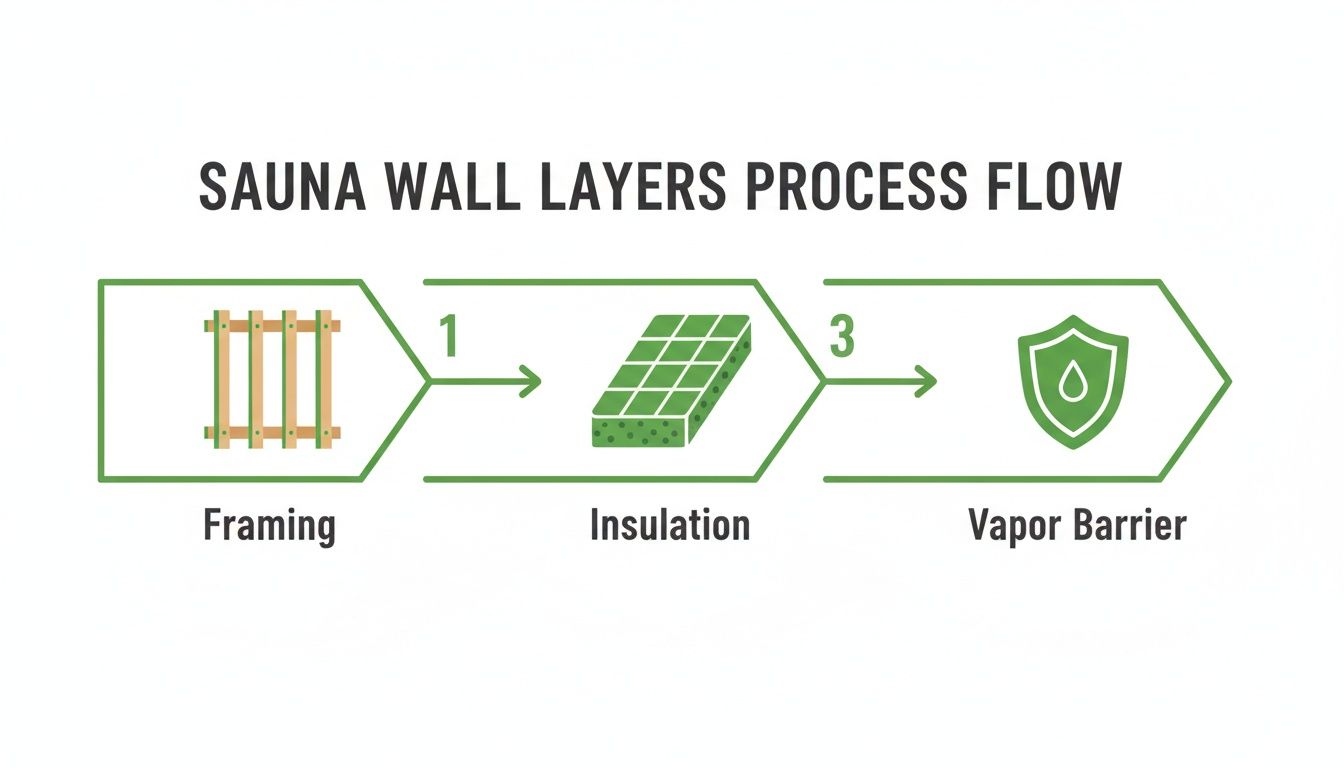
You can see how the framing, insulation, and that all-important vapor barrier work in harmony. They create a sealed, efficient box where your steam generator can do its job without wasting a single drop of energy.
Installation Safety Is Non-Negotiable
Okay, let's get serious for a moment. This is the one part of your project where the "DIY" part has to stop. A steam generator combines high-voltage electricity with pressurized water plumbing. That's a recipe for disaster if you don't know exactly what you're doing.
Safety Mandate: You must hire a licensed electrician and a licensed plumber for the final hookups. This isn't a suggestion—it's an absolute requirement for the safety of your home and everyone in it. It also keeps your warranty valid and ensures everything is up to code.
As for placement, the generator itself belongs in a dry, accessible spot near the sauna—think a utility room, a nearby closet, or inside a vanity. Never install it inside the steam room itself. Make sure it has plenty of room to breathe.
The steam head (where the good stuff comes out) should be positioned about 6-12 inches off the floor. Place it on a wall away from where you'll be sitting to avoid any chance of getting blasted with painfully hot steam.
If you're still exploring all the different ways to heat your wellness space, you might find our guide on the types of sauna heaters really helpful.
Adding the Finishing Touches for a Luxury Experience
With all the heavy lifting of construction and waterproofing behind you, this is where the magic really happens. This is the moment your DIY steam sauna goes from being a well-built box to your own personal sanctuary. These finishing touches aren't just for looks; they’re about creating a space that feels luxurious, safe, and deeply restorative every single time you open the door.

The materials you choose for the interior have to pull double duty. They need to be beautiful, of course, but more importantly, they must be tough enough to handle constant high heat and humidity. I've found that porcelain tile and natural stone are fantastic choices for walls and floors—they’re non-porous, incredibly durable, and give you that clean, spa-like feel that’s also a breeze to maintain.
Designing for Comfort and Safety
Let's be honest, your seating can make or break the entire experience. The benches are the most important element for pure comfort. Think about ergonomics here. You want to use non-porous materials like stone, tile, or specialized composites that won't soak up moisture or get painfully hot. Trust me on this: smooth, rounded edges and a comfortable depth will make your steam sessions infinitely more enjoyable.
Beyond the benches, there are a few other details you simply can't skip for a safe and functional steam room:
- Vapor-Proof Door: Don't skimp here. The door needs to be fully gasketed to create a perfect seal. This is what keeps the steam in and allows your generator to work efficiently.
- Steam-Rated Lighting: This is non-negotiable. All your light fixtures must be low-voltage and specifically rated for steam environments. It’s a critical safety measure to prevent any electrical hazards in a wet space.
- Proper Ventilation: Good ventilation is key not only for maintaining air quality during a session but also for letting the room dry out completely afterward. This is your best defense against mold and mildew.
Your final tests are easily the most important part of the entire build. Before you even think about your first real session, run the sauna through a full cycle. Get in there and check for any steam leaks around the door, make sure the lighting is working perfectly, and confirm your ventilation system is moving air the way it should.
This obsession with detail is what separates a good steam room from a great one. It’s also where professionally crafted solutions really shine. Brands like Mande Spa have spent years perfecting these finishing touches. Their saunas, which proudly ship from within the USA, offer a guaranteed level of luxury and safety that takes all the guesswork out of the process.
If you’re dreaming of a flawless finish without the risk, see the Mande Spa Outdoor link and consider a pre-built sauna designed for a lifetime of wellness.
Got Questions About Building Your Own Steam Sauna?
So, you're thinking about building your own steam sauna. That's fantastic. It’s a rewarding project, but it's natural to have a few questions before you start framing walls and running pipes. I’ve been there. Let's walk through some of the most common things people ask when they're getting started.
The Big Question: DIY Cost vs. a Pre-Made Kit
This is usually the first thing on everyone's mind. Building a steam sauna from scratch can run you anywhere from $3,000 to $8,000, and sometimes even more. The final price tag really boils down to your material choices (cedar vs. tile, for example) and how much of the work, like electrical and plumbing, you have to farm out to the pros.
On the other hand, a high-quality kit, like the ones from Mande Spa, gives you a firm number right from the start. You get the benefit of professional design, a warranty, and the confidence that all the parts are designed to work together perfectly. It might look like more money upfront, but it often saves you from costly surprises and headaches down the road.
Can I Turn My Shower into a Steam Room?
Yes, you absolutely can, and it's a popular way to go! But let's be clear: this is a full-blown renovation, not just a weekend upgrade. You're essentially creating a waterproof, vapor-proof box.
Every single surface, including the ceiling, needs to be completely sealed. You'll need a special gasketed door to keep the steam in, a dedicated steam generator, and all your lights and fixtures must be vapor-proof and rated for the heat. It’s a much bigger job than a typical bathroom remodel.
What's the #1 Mistake People Make?
I can't stress this enough: the single biggest, most catastrophic mistake is skimping on the waterproofing and vapor barrier. A tiny gap or a pinhole can let steam and moisture creep into your walls. Before you know it, you're dealing with black mold, wood rot, and structural damage that can cost a fortune to fix. This is the one place you cannot cut corners. Period.
Do I Really Need to Hire an Electrician and Plumber?
Yes. 100% yes. This is not the place to test your DIY skills. A steam generator is a powerful appliance that brings high-voltage electricity and water into very close contact. Getting that connection wrong isn't just a risk—it's incredibly dangerous.
For your own safety and your family's, hire licensed professionals for the electrical and plumbing hookups. They'll make sure everything is up to code, safe, and done right the first time. It's the best money you'll spend on this entire project.
Feeling like the DIY route might be more than you want to take on? If you'd rather step right into your personal oasis without the hassle, Vitality Sauna Store has you covered. We carry the stunning Mande Spa collection, which is engineered for incredible performance and shipped right from the USA. It’s the perfect blend of luxury and convenience.
Explore the Mande Spa Outdoor collection and find the sauna you've been dreaming of.