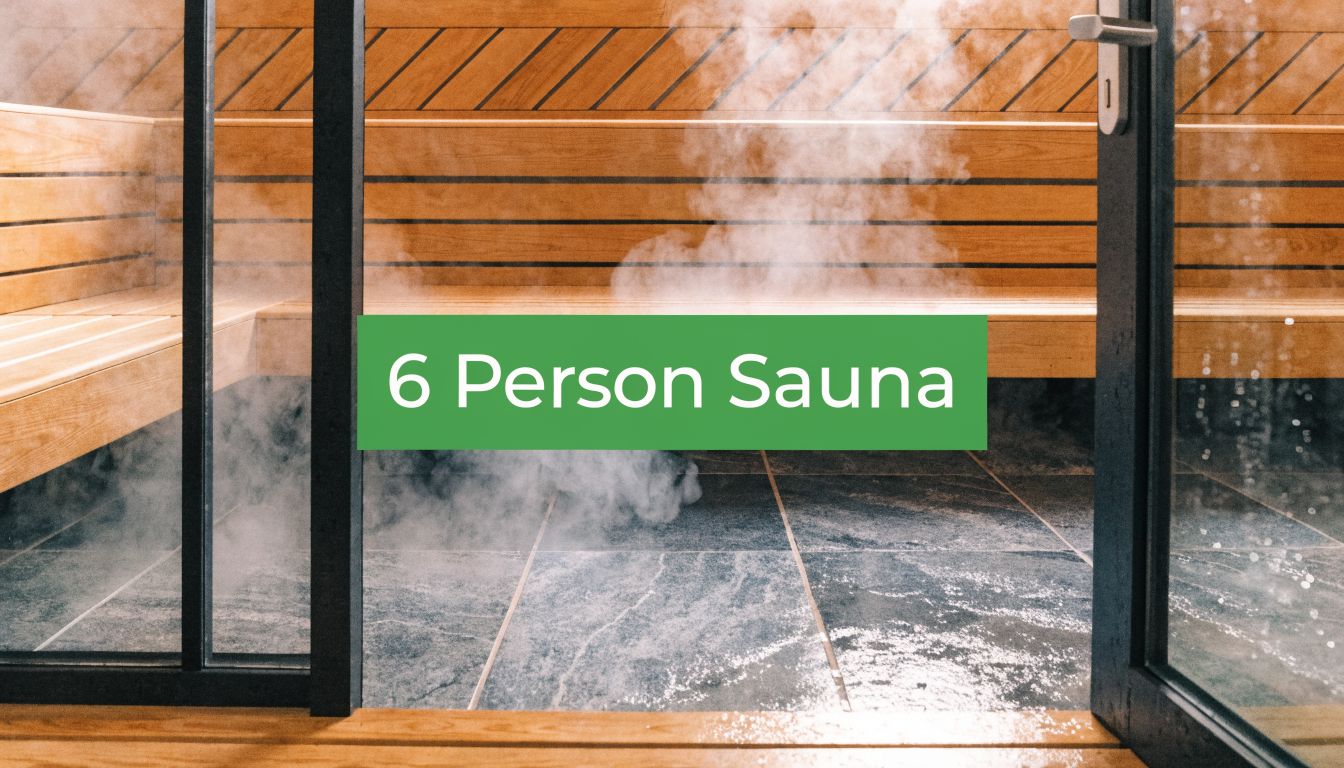
6 Person Sauna: Your Ultimate Wellness Retreat
You’re probably here because the idea of a home sauna has shifted from “someday luxury” to “this could fit my life.” Maybe you want a recovery space after workouts, a quiet ritual before bed, or a better way to gather with family than sitting around another screen. A 6 person sauna sounds like the sweet spot. Big enough to share, substantial enough to feel like a real retreat, and practical enough to make daily use worthwhile.
That interest makes sense. At-home wellness has become less about collecting gadgets and more about creating rituals you’ll keep. Sauna bathing stands out because it’s simple. Heat, stillness, breath, and time. Done well, it supports circulation, helps the body sweat, eases physical tension, and often leaves skin looking clearer and the mind feeling less cluttered.
Many people also love the steam element of a traditional sauna. When water touches hot stones, the air changes instantly. The heat feels fuller, breathing often feels easier, and the whole room becomes more immersive. That combination of dry heat and steam has made sauna culture endure for generations.
The practical side matters just as much as the feeling. A 6 person sauna has to fit your floor plan, your electrical setup, your comfort expectations, and your long-term budget. It also has to be built well enough that you’ll trust it for years. That’s where careful shopping matters. USA-shipped options from brands such as MandeSpa and TheraSauna appeal to buyers who want durable construction and want to avoid lower quality imports that can leave too much uncertainty around materials, service, and support.
Your Sanctuary Awaits The Rise of At-Home Wellness
Home has become the place where people want their best habits to happen. Not just sleep and meals, but recovery, reflection, and daily reset. A sauna works beautifully in that role because it turns a spare room, a backyard corner, or a wellness area into a ritual space you’ll return to again and again.
Heat changes the body in ways people can feel quickly. Blood flow increases, muscles tend to loosen, and sweating helps many users feel physically lighter afterward. For some, that means post-exercise recovery. For others, it means unwinding after a stressful day or settling into a calmer evening.
Sauna bathing also has meaningful long-term wellness relevance. According to Medical News Today’s summary of sauna research, people using a sauna 4 to 7 times per week were 63% less likely to experience sudden cardiac death, and those sessions can burn 73 to 131 calories in just 10 minutes. That doesn’t mean a sauna replaces exercise, sleep, or medical care. It means regular use can become a valuable part of a broader wellness practice.

Why the ritual matters
The appeal isn’t only physical. A sauna session creates a clear boundary in the day. You step in carrying stress. You step out slower, cleaner, and more present. That repeatable rhythm is one reason many homeowners start researching saunas for home wellness spaces once they realize they don’t need a spa membership to build the habit.
Steam-focused sessions add another layer. Warm air and moisture can feel soothing, especially for people who enjoy a more traditional sauna atmosphere. Skin often feels refreshed afterward because heat and perspiration help clear the surface. That’s a simple reason many sauna owners describe the experience as both restorative and cosmetic.
A good sauna doesn’t just heat a room. It gives you a place where your body knows how to downshift.
Why quality changes the experience
Premium construction becomes a critical factor. The difference between a sauna that gets used often and one that becomes an expensive corner feature usually comes down to comfort, consistency, and trust in the materials. MandeSpa outdoor models bring a polished architectural feel to the backyard, while TheraSauna has earned attention from buyers who prioritize stable heat, thoughtful design, and USA-made craftsmanship.
That matters if you want something that feels intentional inside your home, not improvised. It matters even more if you want a product that ships within the USA and doesn’t carry the common concerns people have with lower quality imports. When you’re creating a personal sanctuary, the build quality becomes part of the wellness experience.
Understanding Modern Sauna Heating Technologies
Most confusion around a 6 person sauna starts with one question. What kind of heat do you want to live with? The answer affects everything from how the room feels to how often you’ll use it.
Some people want the classic enveloping heat of a traditional sauna. Others want a gentler experience they can settle into more easily. Others still want flexibility. Once you understand the basic heating categories, the choice gets much clearer.

Three main ways a sauna creates heat
A traditional electric sauna uses a heater and stones to raise the air temperature. You can often ladle water over the stones for a steam effect, which changes both the humidity and the sensation of the heat. This is the experience many people picture first when they think of sauna bathing.
A FAR infrared sauna works differently. Instead of focusing on heating the air to the same degree, it uses infrared elements to warm the body more directly. The result is usually a milder room feel with a steady, penetrating warmth that many people find easier to tolerate for longer sessions.
Hybrid models combine both approaches. That appeals to households where different people want different sessions, or to buyers who don’t want to commit to a single style of heat.
Sauna Heating Technology Comparison
| Feature | Traditional Electric | FAR Infrared | Hybrid |
|---|---|---|---|
| Heat feel | Hot air surrounds the body | Gentler heat felt more directly on the body | Can offer both room-style heat and infrared warmth |
| Steam option | Yes, commonly part of the experience | No traditional steam ritual | Often includes a traditional component |
| Typical user preference | Classic sauna bathers, steam lovers, social sessions | Users wanting a milder environment, focused therapeutic warmth | Households with mixed preferences |
| Warmth profile | Intense and ambient | Steady and targeted | Flexible depending on selected mode |
| Best fit | Traditional wellness rituals and group atmosphere | Regular solo or shared sessions with a softer feel | Buyers who want versatility |
How to match the heater to your wellness goals
If your goal is group recovery, a traditional heater often creates the social atmosphere people expect. The room feels active. The air feels alive once steam enters the mix. That works well when the sauna is part of a post-training or end-of-day gathering routine.
If your goal is pain relief, gentle daily use, or lower-intensity sessions, FAR infrared may feel more approachable. TheraSauna is known for proprietary ceramic TheraMitters and a focus on stable infrared heat, which is why many health-focused buyers look closely at that category.
If your home has mixed preferences, hybrid may solve the household debate. One person can enjoy a classic sauna ritual. Another can choose a gentler session profile on a different day.
Practical rule: Choose the heat style you’ll use consistently, not the one that sounds most dramatic in a showroom description.
For a deeper overview of heater formats and how they shape the experience, this guide on different sauna heater types is a useful starting point.
Common misunderstandings
People often assume hotter always means better. It doesn’t. Better means the heat supports your goals and makes you want to come back tomorrow.
Another common mistake is buying based only on the advertised maximum feature list. In real life, comfort wins. If your sessions feel harsh, inconvenient, or mismatched to your routine, the sauna won’t become part of your life. The right technology makes regular use feel natural.
Planning Your Space For A 6 Person Sauna
The label “6 person” creates more confusion than almost anything else in this category. Buyers understandably assume it means six adults will sit comfortably for a normal session. In practice, that often isn’t how these spaces feel once people step inside.
According to sauna sizing guidance from Haven of Heat, a “6-person” sauna typically has realistic comfortable seating for 3 to 4 adults. The same guidance notes that a well-designed model often measures around 6' x 8' with 48 square feet, and a common rule is to divide interior square footage by 2 to estimate genuine comfort. That’s one of the most helpful filters you can use when comparing models.

Start with real use, not brochure math
A family of four using the sauna regularly needs a different layout than a couple who occasionally hosts friends. Bench depth, legroom, reclining options, and movement around the heater all change how spacious a sauna feels. If you’re buying for frequent daily use, comfort matters more than headline capacity.
That’s why it helps to think in scenarios:
- Couple-focused use: You may want room to stretch out rather than squeeze in more seats.
- Family relaxation: Easy entry, safe circulation, and balanced bench space matter more than nominal capacity.
- Group recovery: You’ll want better airflow and more realistic personal space so sessions don’t feel crowded.
For more context on matching dimensions to real use, this article on how to choose the right sauna size can help you think through footprint and seating more clearly.
Indoor planning details that get missed
Indoor installations feel convenient because they’re close to the shower, gym, or primary suite. But indoor placement requires discipline in planning. You need enough room not only for the sauna shell, but also for access, airflow, and maintenance.
Look closely at these points:
- Electrical service: Many larger sauna setups need dedicated electrical planning. Confirm the model requirements early so your electrician can plan the run cleanly.
- Ventilation: Heat and moisture need a path to move properly. Good ventilation protects comfort inside the sauna and helps the surrounding room stay in good shape.
- Flooring and base support: The surface should be stable, level, and appropriate for heat and moisture exposure.
- Door swing and circulation space: A sauna that technically fits can still feel awkward if the entry pinches into a hallway or gym zone.
Outdoor planning details that shape the experience
Outdoor placement changes the sauna from a room feature into a destination. The walk across a patio or garden becomes part of the ritual. But outdoor use requires careful thinking about weather exposure, access in all seasons, and the surface below the unit.
A level pad or structurally sound deck matters. So does the path to the sauna. If the route is awkward, muddy, or poorly lit, daily use drops.
This walkthrough gives a helpful visual sense of how homeowners think through installation choices:
Leave enough room for the sauna to breathe, for people to enter easily, and for service access later. Tight placement often creates headaches that don’t show up on a floor plan.
A simple planning checklist
- Measure the actual site. Don’t estimate from memory.
- Check access paths for delivery and assembly.
- Confirm utility requirements before choosing a model.
- Decide how many adults should be comfortable, not just how many can fit.
- Think about the full ritual. Towel storage, cool-down seating, and a nearby shower can change how often you use the sauna.
A 6 person sauna works beautifully when the space around it is planned with the same care as the cabin itself.
Choosing Your Sanctuary Indoor vs Outdoor Models
The indoor versus outdoor choice isn’t mostly about style. It’s about how you want sauna use to fit your life. Some people want the sauna to be as convenient as stepping out of a shower. Others want it to feel like a retreat they walk toward.
Indoor models make the habit easy. Outdoor models make the ritual memorable. Neither is better. The right answer depends on how your home functions and what kind of experience you want to repeat.

When indoor placement makes more sense
Indoor placement often suits people who already have a home gym, recovery room, or large primary bath area. You stay close to the rest of your routine. That makes shorter, more frequent sessions easier to maintain.
Indoor saunas also work well for buyers who want year-round convenience without walking outside in changing weather. If your wellness routine depends on consistency, easy access often matters more than drama.
That said, indoor builds need strong material choices. Buyers who are sensitive to finishes and interior air quality often prefer models built with carefully selected woods. TheraSauna’s use of non-toxic Aspen is part of why some shoppers focus there rather than settling for common imported alternatives.
When outdoor placement creates more value
Outdoor saunas can transform a backyard into a wellness destination. The transition from home to sauna becomes part of the reset. For many people, that separation helps the session feel deeper and more intentional.
MandeSpa outdoor models are especially relevant for buyers who want the sauna to contribute to the overall setting as well as the routine. They can fit naturally into patios, pool areas, and garden-centered designs. If you’re already planning a broader backyard upgrade, a thoughtful guide to outdoor living can help you think about shade, flow, seating, and how the sauna will sit within the larger environment.
Safety changes the sizing decision
One reason outdoor buyers get tripped up is the assumption that larger-looking cabins automatically support safe group use. According to capacity and safety guidance referenced by Heavenly Sauna, group use at 170 to 180°F requires 12 to 15 square feet per person for optimal safety, and many products marketed as “up to 6 bathers” don’t fully address heat stress, ventilation, or circulation concerns. That’s a strong reminder that true six-person comfort often requires a larger sauna than shoppers expect.
A decision lens that works
Use this filter if you’re stuck:
- Choose indoor if convenience will determine whether you use it often.
- Choose outdoor if you want the sauna to feel like a retreat rather than an appliance.
- Choose premium materials if you care about long-term comfort and confidence in what you’re heating.
- Choose for realistic occupancy if family safety and comfort matter more than marketing labels.
One factual option in this category is the outdoor infrared sauna collection, which can help you compare how exterior models fit different spaces and routines.
The best 6 person sauna isn’t the one with the boldest capacity claim. It’s the one your household can use comfortably, safely, and often.
Understanding Your Investment Costs and Long-Term Value
A 6 person sauna is less like buying a chair and more like adding a small wellness room to your home. The price on the product page matters, but it is only one part of the decision. Daily use, electrical demand, installation work, and long-term reliability shape whether the sauna feels like a smart addition or an expensive compromise.
That is especially true if you are buying with a clear purpose. A family relaxation sauna used a few evenings a week creates one kind of cost pattern. A recovery-focused sauna for regular post-workout sessions creates another. The right model depends on how often you plan to heat it, how quickly you want it ready, and how much monthly energy use fits comfortably into your routine.
The real cost starts after delivery
Two saunas can sit in a similar price range and cost very different amounts to own over time. Heater type, insulation, build quality, and warm-up time all affect what you pay month after month. A lower-priced unit can become the more expensive choice if it draws more power, takes longer to heat, or needs repairs sooner than expected.
That is why long-term value matters more than bargain pricing.
For many households, a well-built infrared model makes sense if the goal is frequent personal wellness sessions with lower operating demands. A traditional heater may still be the better fit for buyers who want the hotter, classic sauna environment for group sessions or family gatherings. The better choice is the one that matches the way your household will use it.
Four cost categories worth planning for
Writing down ownership costs before you buy helps keep the decision clear.
- Sauna price: The cabin, heater system, benches, controls, and any included upgrades.
- Installation: Electrical work, delivery access, foundation or flooring prep, and assembly help if needed.
- Monthly operation: Energy use based on heater style, insulation quality, and session frequency.
- Long-term support: Replacement parts, warranty coverage, and how easy it is to get help if something goes wrong.
This approach works like budgeting for a home gym. The upfront purchase gets your attention first, but the setup requirements and the ease of using it for years are what determine whether it becomes part of your life.
Where better construction pays off
Premium materials often save money in less obvious ways. Better insulation can reduce heat loss. Stable wood construction can hold up better through repeated heating and cooling cycles. Reliable controls and heaters lower the chance of service headaches, especially in larger cabins where downtime feels more frustrating.
USA-made models often stand out here because the support structure behind the sauna is easier to evaluate. You are not only choosing a box that gets hot. You are choosing the quality of the components, the consistency of the manufacturing, and the confidence that help will still be available later. That is one reason many buyers put MandeSpa and TheraSauna on the short list when they want a premium option built for regular home use rather than occasional novelty use.
Choose value based on your wellness goal
If your goal is group recovery, look closely at heat-up performance, interior layout, and how comfortably the sauna handles repeated sessions.
If your goal is family relaxation, pay more attention to ease of use, gentle comfort, predictable operating costs, and a design that fits naturally into your home routine.
If your goal is long-term personal wellness, consistent efficiency and dependable support may matter more than a lower initial price.
Financing can also be reasonable if it lets you choose the model that fits your space, usage habits, and wellness goals the first time. The best investment usually comes from buying a sauna you will use often, maintain easily, and still trust years from now.
Accessorizing and Maintaining Your Personal Retreat
A sauna becomes part of your life through the small details. The cabin matters, of course, but the ritual often takes shape through the accessories you reach for every time. A towel hook in the right place, a backrest that lets you stay longer, a bucket and ladle that make steam bathing feel deliberate. These touches turn the room into your room.
Accessories that actually improve the experience
Some additions are traditional. Some are comfort-focused. The best ones support the kind of session you already know you want.
- Bucket and ladle: Essential for traditional sauna users who want to create steam and control how the room feels.
- Ergonomic backrests: Helpful if you want longer, more relaxed sessions without constantly shifting position.
- Aromatherapy options: Used thoughtfully, scent can help define whether the session feels energizing or calming.
- Lighting choices: Soft interior lighting can make evening use feel quieter and less clinical.
- Simple exterior additions: A bench, robe hook, or cool-down chair outside the sauna often gets used more than people expect.
Maintenance that protects the investment
Maintenance doesn’t need to be complicated. It just needs to be consistent. A good sauna rewards steady care far more than occasional deep cleaning.
A simple rhythm works well:
- Wipe benches after use so sweat and moisture don’t linger.
- Air out the interior after sessions so the wood can dry properly.
- Keep floors clean and free of debris that can hold moisture or create odors.
- Inspect the heater area according to the manufacturer’s guidance and keep that zone clear.
- Use clean towels during sessions to reduce wear on the wood surfaces.
Clean habits preserve the feel of the sauna as much as the appearance. A fresh interior invites regular use.
Caring for the atmosphere, not just the wood
Owners sometimes focus only on keeping the sauna visually clean. That matters, but the atmosphere matters too. If the room smells fresh, feels orderly, and stays comfortable to enter, you’ll use it more often. If it starts to feel neglected, your ritual slips.
That’s why I usually suggest choosing fewer accessories, but choosing them well. Add what supports your real routine. Keep the maintenance light and repeatable. The payoff is a sauna that still feels calm and welcoming long after the novelty wears off.
The Value of USA-Made Quality Warranty and Support
A sauna is too large and too important a purchase to treat like a disposable home product. Materials, support, and accountability matter. That’s where USA-made quality often stands apart.
When a sauna ships within the USA and comes from companies focused on domestic support, the process tends to feel more reliable from delivery through ownership. Questions get answered more easily. Replacement needs are clearer. You’re not left guessing who is responsible if something doesn’t arrive as expected.
Why this matters at purchase time
Lower quality imports can look appealing in photos. The problem is that uncertainty often shows up later. Buyers may have questions about materials, construction consistency, service responsiveness, or parts access. Those concerns matter more with a wellness product that you’ll be heating repeatedly in a personal space.
MandeSpa and TheraSauna stand out for shoppers who want more confidence in the purchase decision. TheraSauna’s limited lifetime warranty and access to a Sauna Expert support line add a layer of reassurance that many buyers find meaningful. MandeSpa also appeals to homeowners who want outdoor sauna options that feel thoughtfully designed rather than generic.
Peace of mind is part of the product
Free U.S. shipping also matters more than people think with a large unit. So does the ability to reach a real support team if you need help with planning, delivery, or ownership questions.
In practical terms, USA-made quality isn’t only about origin. It’s about buying something with clearer standards, more accountable support, and a better chance of becoming a long-term part of your life.
Begin Your Wellness Journey and Frequently Asked Questions
It is easy to picture the good part first. A calm evening. Warm air. Everyone finally off their screens for a little while. The better question is what that scene looks like in your actual home, with your floor plan, your power setup, your budget, and the way your household really relaxes.
A well-chosen 6 person sauna can support very different routines. One home uses it for post-workout recovery with two adults stretching out after training. Another uses it as a family wind-down space on winter evenings. Another wants enough room to host friends without packing people in too tightly. That is why the right model is not just about capacity. It is about fit.
If you are ready to bring wellness home, start with the use case you will return to week after week. MandeSpa makes sense for homeowners who want an outdoor retreat that feels like part of the property, not an afterthought. TheraSauna is a strong match for buyers who care about FAR infrared heat, USA-made construction, and a more treatment-focused experience. Both speak to a more deliberate way of building a sauna habit that lasts.
Frequently asked questions
Is a 6 person sauna really right for a family of four
In many cases, yes.
A 6 person layout often gives a family of four the room they actually want, not just the room they can technically squeeze into. Children grow, adults want personal space, and a session feels more relaxing when no one has to sit shoulder to shoulder. It helps to treat the stated capacity like a dining table rating. Six seats on paper does not always mean six people will want to use it that way every day.
Should I choose traditional heat or FAR infrared
Choose based on the experience you want to repeat consistently.
Traditional heat suits buyers who enjoy a hotter room, a classic sauna feel, and, in some models, the option for steam-like humidity from water on rocks. FAR infrared suits buyers who want a gentler environment with direct warmth that can feel easier to stay with for longer sessions. If your goal is group recovery after exercise, some households prefer the familiar ritual of traditional heat. If your goal is quiet, frequent use with less intensity, FAR infrared often fits more naturally into everyday life.
Is an outdoor sauna harder to own than an indoor one
Outdoor ownership can be very manageable if the setup is planned well from the start. The main questions are practical ones: Is the base level? Is the path to the site clear for delivery and assembly? Will you enjoy walking out to it in the weather where you live?
Indoor models usually win on convenience. Outdoor models often win on atmosphere and flexibility, especially when interior square footage is tight. The better option is the one you will use often enough to justify the space and operating cost.
How do I know if the operating cost will feel reasonable
Look at it like any other home wellness appliance. The cost is shaped by heater type, session length, local electricity rates, insulation quality, and how often your household uses it. A sauna used regularly by several people can feel like a better value than one purchased for an occasional solo session in a space that is too large for the routine.
What is the smartest next step before buying
Measure twice, then match the sauna to your real habits.
Check the footprint, ceiling height, electrical requirements, and the path into the installation area. Then ask a simpler question. Are you creating a family reset space, a recovery zone, or a backyard destination for gathering? That answer usually points you toward the right model faster than any feature list.
You can compare MandeSpa outdoor models and TheraSauna USA-made options through Vitality Sauna Store, then choose the sauna that fits your space, your routine, and the kind of wellness practice you want to keep for years.